Thank you for writing to us. One of our executive will reach back to you through your submitted medium. In case there’s an urgency, feel free to connect over WhatsApp for faster response.
Prefer calling? Dial +918048041145 (International callers) or 08048041145 (Indian callers).
Built for industrial-scale solvent recovery, the EcoChyll® X7 high-speed evaporator combines large loading capacity with rapid continuous cooling to deliver fast, efficient evaporation. Featuring Ecodyst’s proprietary direct self-cooling condensers, the X7 delivers exceptional cooling performance and large condenser surface area to reliably condense high volumes of solvent.
The 50L EcoChyll X7 outperforms any 50L rotary evaporator on the market. No traditional 50L rotovap can match the X7’s evaporation rates, energy efficiency, start-up time, or ease of operation — and you get true 50L capacity.
Turnkey System Designed for Large-Scale Solvent Recovery and Decarboxylation
Solvent Recovery Throughput: Up to 25L of ethanol per hour
*True Load Volume: 50L
*Decarboxylation Capacity: Yes
*Automation: Optional
Industrial-Scale Evaporation with Unmatched Speed : Built for industrial-scale solvent recovery, the EcoChyll® X7 high-speed evaporator combines large loading capacity with rapid continuous cooling to deliver fast, efficient evaporation. Featuring Ecodyst’s proprietary direct self-cooling condensers, the X7 delivers exceptional cooling performance and large condenser surface area to reliably condense high volumes of solvent.
The 50L EcoChyll X7 outperforms any 50L rotary evaporator on the market. No traditional 50L rotovap can match the X7’s evaporation rates, energy efficiency, start-up time, or ease of operation — and you get true 50L capacity.
Why the X7 Outperforms Traditional Rotary Evaporators
Direct Cooling
Refrigerant is pumped directly from the compressor through a metal condenser coil, enabling pull-down times of minutes while consuming significantly less electricity than recirculating chillers.
Stationary, Stirred Evaporation Flask
The X7 replaces the rotating flask with an upright, stationary flask heated by a mantle and stirred with an overhead stirrer. This design provides multiple advantages:
*More energy efficient heating
*Full 50L volume utilization
*Reduced mechanical complexity
*More efficient stirring than rotating a large flask
*Convenient drain valve for residual product collection — something traditional rotovaps cannot offer
Faster Runs, Lower Costs, Less Labor:Achieve faster run times, reduced operating costs, and reduced human effort. If you need a 50L evaporator, choose the EcoChyll X7.
Industrial-Scale Rotary Vacuum Evaporators from Ecodyst
Ecodyst was founded to improve the performance of standard laboratory rotary evaporators, setting a new benchmark for industrial solvent recovery and botanical extraction. The EcoChyll® X7 delivers a scalable, modular solution with superior performance for budget-conscious operators.
If you need a more budget-friendly option, consider the single-condensor EcoChyll® X5, available in 22L and 50L sizes.To learn more about Ecodyst’s proprietary continuous cooling technology or to explore applications beyond solvent recovery, contact our team today Or fill out the form below to receive a quote on the EcoChyll® X7 High-Speed Evaporator System
Modular Upgrade Program : The X7 EcoChyll condensation unit can be paired with 22L, 50L, 72L, and 100L evaporation units.If you purchase a 50L EcoChyll X7 and later need to double capacity, you can simply add a 100L evaporation unit, saving significantly compared to purchasing a second complete system.
Key Features:
*Recovers residual solvents below 500 ppm
*Handles a wide range of solvents, including water and all common cannabis/hemp solvents
*Stationary evaporation flask with siphon feed and drain valve for uninterrupted operation
*Can be integrated inline with botanical extraction or winterization systems
*Digital interfaces and data monitoring for stirrer, vacuum pump, chiller, and heating mantle
*Patented EcoChyll condenser reaches -40°C in under one minute
*Large evaporation flask reduces bumping into the condenser
*Single-user operation with minimal intervention
*Capable of evaporating ethanol at low temperatures (38°C)
*Highly energy efficient
*Safety features for automatic shutdown
Training & Service :We are committed to exceptional service before, during, and after your purchase. During normal Eastern Standard Time business hours, we can diagnose issues, provide solutions, and, if necessary, overnight replacement parts to ensure you experience minimal downtime.
For Enquiry Send Email Or Contact Septech Marketing LLP Now!
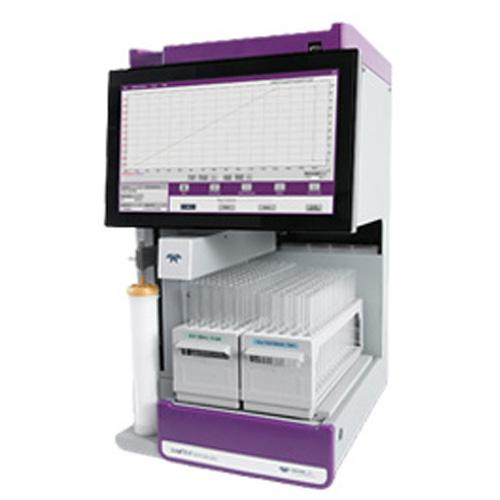
The CombiFlash® SFC from Teledyne LABS is an advanced purification system designed to make Supercritical Fluid Chromatography (SFC) as simple, accessible, and efficient as conventional flash chromatography. Combining the familiar operation of the CombiFlash platform with proven PeakTrak® software and the high-performance advantages of SFC, the system provides a seamless transition from normal-phase flash purification to faster and more efficient separations.
Using carbon dioxide (CO₂) as the primary mobile phase, CombiFlash SFC enables rapid, high-performance purification while reducing organic solvent consumption by up to 95%. This helps laboratories lower solvent usage, reduce operating costs, and establish a more sustainable purification workflow.
The system supports 40–200 mL/min flow rates and disposable flash columns ranging from 4 to 220 g. Four cosolvent options and gradients from 0–70% modifier composition provide flexibility for purifying a wide range of compounds. Integrated open-bed fraction collection, solid sample loading capabilities, and thermal management maintaining a consistent 40°C operating temperature further simplify day-to-day operation.
With intuitive PeakTrak software and guided method-development tools, CombiFlash SFC enables chemists to utilize familiar silica stationary phases, column-selection strategies, and established flash chromatography workflows while gaining the speed, selectivity, and efficiency of SFC.
CombiFlash SFC is ideally suited for pharmaceutical intermediates, medicinal chemistry compounds, natural products, specialty chemicals, synthetic reaction mixtures, and lipophilic compounds.
Septech Marketing LLP, authorized distributor for Teledyne LABS, offers solutions and support for laboratories seeking faster, greener, and more productive purification technologies.
Flash chromatography is a widely used purification technique in organic and pharmaceutical laboratories for the rapid separation of chemical compounds from complex mixtures. As an advanced form of preparative column chromatography, it utilizes pressurized gas or pumps to force the mobile phase through a column packed with a stationary phase, typically silica gel. This controlled pressure significantly accelerates the separation process compared to traditional gravity-driven column chromatography, reducing purification times from several hours or days to just minutes.
The technique operates on the principle of differential adsorption, where compounds in a mixture interact differently with the stationary phase and travel through the column at varying rates. As a result, individual components can be effectively separated and collected in distinct fractions. Flash chromatography is highly versatile and can accommodate a broad range of sample sizes, from milligram-scale research applications to larger-scale industrial processes.
Modern flash chromatography systems often incorporate automated controls, gradient elution capabilities, and advanced detection methods, enhancing reproducibility, efficiency, and accuracy. It is extensively applied in drug discovery, natural product isolation, chemical synthesis, and quality control laboratories. Owing to its speed, reliability, and adaptability, flash chromatography has become an indispensable tool for chemists, enabling the efficient purification of compounds and supporting innovation across scientific and industrial research fields.
For Enquiry Send Email Or Contact Septech Marketing LLP Now!
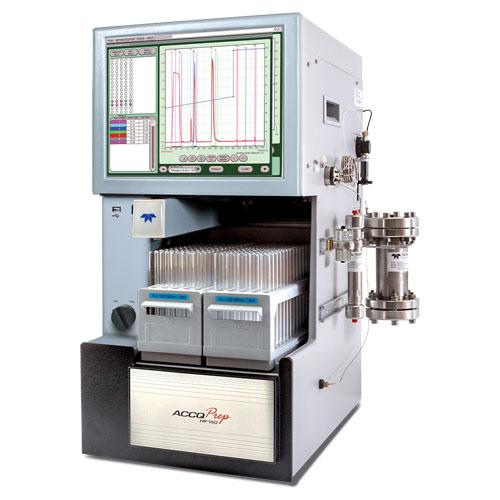
The ACCQPrep HP150 is a user-friendly preparative HPLC system designed to simplify purification workflows by eliminating unnecessary and complex method parameters commonly found in traditional HPLC systems. Built for efficiency and ease of use, it delivers high performance without requiring extensive training.
Key Features & Benefits
✅ Simplified Operation
Intuitive control via PeakTrak® software
Eliminates overly complex method setup
Designed specifically with chemists in mind
✅ Fully Integrated Software
Embedded system — no stand-alone PC required
Compact footprint with built-in touchscreen interface
Free software updates to adapt to evolving lab needs
✅ Smart Lab Monitoring
Active solvent level monitoring
Waste level detection to prevent overflow
Reduced risk of solvent spills and lab interruptions
✅ Intelligent Fraction Collection
RFID-enabled collection racks
Prevents missed or overfilled test tubes
Improves collection accuracy and efficiency
Designed for Modern Prep Labs:The ACCQPrep HP150 combines automation, safety features, and simplified controls into a compact preparative HPLC platform. It is ideal for laboratories seeking:
*Reliable compound purification
*Reduced operator error
*Streamlined workflows
*Compact, all-in-one HPLC systems
For Enquiry Send Email Or Contact Septech Marketing LLP Now!


 Chat with us
 Chat with us