Mumbai
08048041145
+919821412924
CETAC Autosamplers

Oils 7400 Homogenizing Autosampler

In stockcod not available
Phone Number

08048041145

Please keep 0 before dialling the number.

Email Address septechmumbai@gmail.com

Mon-Thu: 10 AM - 2 PM • Fri: 3 PM - 7AM

Other Website Visit our other website
Address 1, Jayaram Niwas, Tilak Mandir Road, Vileparle East, Mumbai

Mumbai, India, 400057

Description

Oils 7400 Homogenizing Autosampler :As oil testing laboratories expand and analyze increasingly complex sample types, the need for robust automation becomes critical. The Oils 7400 Homogenizing Autosampler enables two distinct sample matrices to be introduced to an ICP instrument from the same system, simplifying workflows and improving efficiency.With a dual-port rinse station fed by two separate peristaltic pumps, the Oils 7400 can switch between oils and coolants testing on demand. Combined with enhanced mixing, faster operation, and sample drip capture, this system delivers reliable analysis without compromise. Key Benefits: *Mix samples immediately prior to analysis for accurate and representative results *Unique dual-matrix design for rapid switching between sample types *Fast, smooth XYZ movement for increased throughput *Accurate positioning to ± 0.4 mm *No probe or stirrer alignment drift *Integrated drip capture to reduce cross contamination Key Features: Why Sample Mixing Matters : Used oil samples often contain particulate material that settles in the sample tube prior to analysis, leading to non-representative results. The Oils 7400 is designed to address this issue through automated sample homogenization. A stirring paddle mounted adjacent to the sample probe mixes each sample efficiently prior to analysis. Both the probe and paddle are cleaned at the rinse station. Mixing parameters are configurable through dashboard software to accommodate viscous oil samples. Accurate and Fast :Each sample is automatically homogenized before analysis. While the current sample is being drawn, the next sample is already being stirred, increasing throughput and saving time. Faster and smoother XYZ movement reduces cycle time by up to 2 seconds per sample compared to previous generation oils automation. With ASXPRESS PLUS rapid sample introduction, the system can analyze up to 2 samples per minute for ASTM 5185 and ASTM 6130 testing. Maintain Sample Integrity:An integrated drip cup travels with the sample probe and stirring paddle to capture droplets and prevent cross contamination during movement between sample tubes. The dual-port rinse station minimizes analyte carryover and ensures clean transitions between samples. Quickly Switch Sample Types:Two separate liquid flow paths and a dual-port rinse station enable fast switching between oils and coolants testing in as little as 5 minutes. The sliding rinse station controls the two peristaltic pumps: *Oils testing: probe and stirrer rinsed with kerosene or white spirit *Coolants testing: second pump delivers water or nitric acid as the rinse agent By changing the sample probe, stirring paddle, and ICP glassware, analysts can switch from oils testing to coolants testing quickly and efficiently. Filtered Probe: The included stainless steel filtered probe removes large particles, protecting downstream components and extending system lifetime. The probe is robust and easy to clean. For Enquiry Send Email Or Contact Septech Marketing LLP Now!

Keywords

Other Products

view all

6814772a5d263414004dd4a4 Card 2

product image
Chromatography

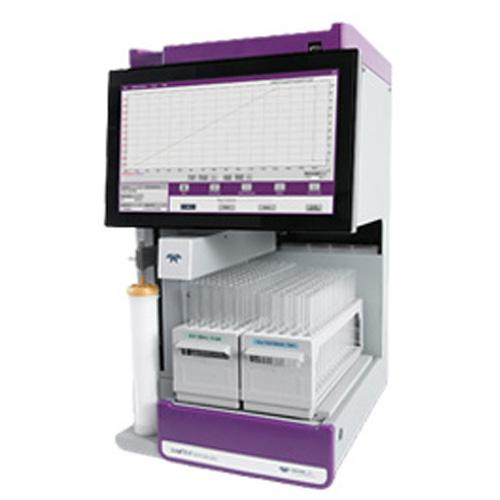
Flash chromatography is a widely used purification technique in organic and pharmaceutical laboratories for the rapid separation of chemical compounds from complex mixtures. As an advanced form of preparative column chromatography, it utilizes pressurized gas or pumps to force the mobile phase through a column packed with a stationary phase, typically silica gel. This controlled pressure significantly accelerates the separation process compared to traditional gravity-driven column chromatography, reducing purification times from several hours or days to just minutes. The technique operates on the principle of differential adsorption, where compounds in a mixture interact differently with the stationary phase and travel through the column at varying rates. As a result, individual components can be effectively separated and collected in distinct fractions. Flash chromatography is highly versatile and can accommodate a broad range of sample sizes, from milligram-scale research applications to larger-scale industrial processes. Modern flash chromatography systems often incorporate automated controls, gradient elution capabilities, and advanced detection methods, enhancing reproducibility, efficiency, and accuracy. It is extensively applied in drug discovery, natural product isolation, chemical synthesis, and quality control laboratories. Owing to its speed, reliability, and adaptability, flash chromatography has become an indispensable tool for chemists, enabling the efficient purification of compounds and supporting innovation across scientific and industrial research fields. For Enquiry Send Email Or Contact Septech Marketing LLP Now!

6814772a5d263414004dd4a4 Card 2

product image
Chromatography

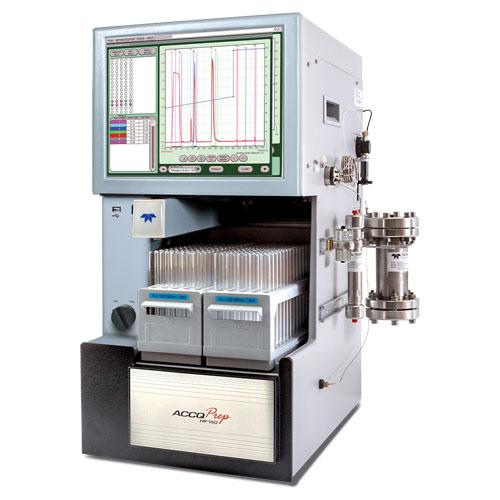
The ACCQPrep HP150 is a user-friendly preparative HPLC system designed to simplify purification workflows by eliminating unnecessary and complex method parameters commonly found in traditional HPLC systems. Built for efficiency and ease of use, it delivers high performance without requiring extensive training. Key Features & Benefits ✅ Simplified Operation Intuitive control via PeakTrak® software Eliminates overly complex method setup Designed specifically with chemists in mind ✅ Fully Integrated Software Embedded system — no stand-alone PC required Compact footprint with built-in touchscreen interface Free software updates to adapt to evolving lab needs ✅ Smart Lab Monitoring Active solvent level monitoring Waste level detection to prevent overflow Reduced risk of solvent spills and lab interruptions ✅ Intelligent Fraction Collection RFID-enabled collection racks Prevents missed or overfilled test tubes Improves collection accuracy and efficiency Designed for Modern Prep Labs:The ACCQPrep HP150 combines automation, safety features, and simplified controls into a compact preparative HPLC platform. It is ideal for laboratories seeking: *Reliable compound purification *Reduced operator error *Streamlined workflows *Compact, all-in-one HPLC systems For Enquiry Send Email Or Contact Septech Marketing LLP Now!

6814772a5d263414004dd4a4 Card 2

product image
Chromatography

Supercritical Fluid Chromatography (SFC) is an advanced separation technique that uses a supercritical fluid—most commonly carbon dioxide (CO₂)—as the mobile phase. In its supercritical state, CO₂ exhibits properties of both a gas (low viscosity, high diffusivity) and a liquid (solvation strength), enabling fast, efficient, and high-resolution separations. SFC bridges the gap between gas chromatography (GC) and liquid chromatography (LC), offering the speed of GC with the versatility of LC. How SFC Works When CO₂ is brought above its critical temperature and pressure, it becomes a supercritical fluid. In this state, it: Penetrates stationary phases efficiently (like a gas) How SFC Works When CO₂ is brought above its critical temperature and pressure, it becomes a supercritical fluid. In this state, it: *Penetrates stationary phases efficiently (like a gas) *Dissolves analytes effectively (like a liquid) *Enables rapid mass transfer and shorter run times Modifiers such as methanol or ethanol are often added to enhance solubility for polar compounds. Dissolves analytes effectively (like a liquid) Enables rapid mass transfer and shorter run times Modifiers such as methanol or ethanol are often added to enhance solubility for polar compounds. Key Components of an SFC System An SFC system typically includes: *Pump – Delivers liquid CO₂ and organic modifiers at precise flow rates *Injector – Introduces the sample into the mobile phase *Column oven – Maintains controlled temperature for reproducibility *Chromatographic column – Packed with stationary phase for separation *Detector – Commonly UV, PDA, MS, or ELSD for compound detection *Back Pressure Regulator (BPR) – Maintains pressure to keep CO₂ in its supercritical state Advantages of SFC: ✔ Faster separations compared to traditional HPLC ✔ High efficiency and sharp peak resolution ✔ Reduced solvent consumption (greener technology) ✔ Easy solvent removal due to volatile CO₂ ✔ Ideal for chiral separations ✔ Compatible with mass spectrometry detection Applications of SFC :SFC is widely used in: *Pharmaceutical analysis – Chiral drug separation, impurity profiling *Environmental testing – Pesticides and pollutant analysis *Natural products research – Plant extracts and bioactive compounds *Chemical research & synthesis labs – Reaction monitoring and purification Why SFC is Growing in Popularity Supercritical Fluid Chromatography offers a powerful alternative to traditional HPLC by providing: *Higher throughput *Improved selectivity *Lower operational costs *Environmentally friendly workflows As laboratories increasingly prioritize speed, sustainability, and analytical performance, SFC continues to gain adoption in both analytical and preparative-scale applications.