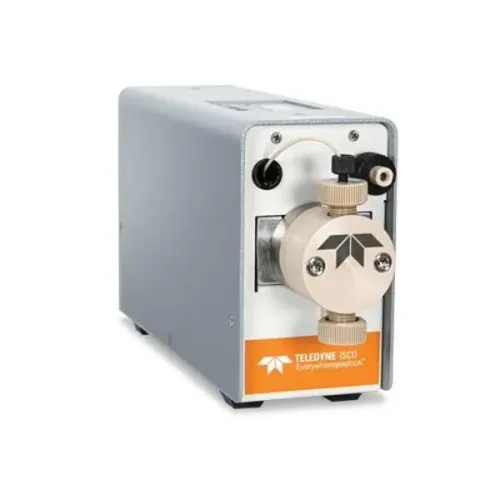

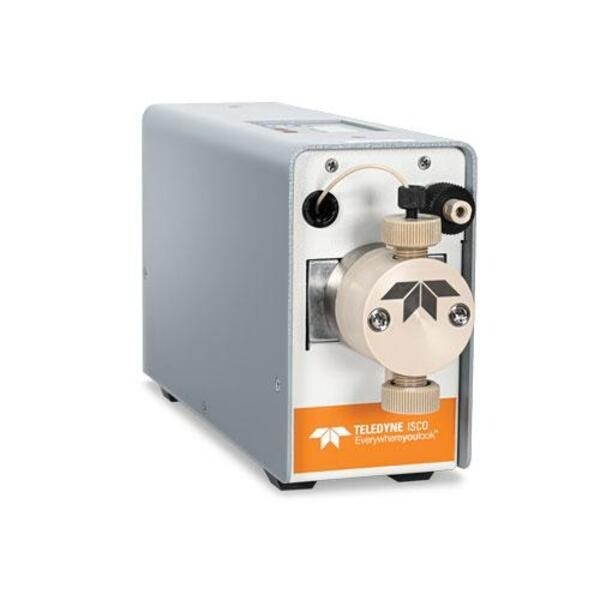
A ReaXus pump can rebuild pressure while still delivering air-filled, pulsating, or reduced flow after a shutdown. You will be able to separate a safe restart from a fault condition, restore flow without stressing the pump, and prove recovery with a timed-volume test rather than a pressure reading alone.
Key takeaways
- Record solvent, temperature, settings, pressure limit, and valve position before restarting.
- Match flushing and priming time to the shutdown duration and exposure conditions.
- Use pressure and timed-volume results to separate air, blockage, and drive faults.
- Request local service or parts support when flow remains unstable after verification.
Classify the shutdown before restarting the pump
Record the solvent identity, reservoir level, room temperature, solvent temperature, exposure of tubing to cold surfaces or airflow, programmed flow, pressure limit, purge-valve position, and automatic-restart state. A reaxus pump after shutdown needs this baseline before you change settings or allow unattended operation.
1. Classify the event as a brief pause, overnight stop, prolonged shutdown, solvent replacement, or unplanned power interruption. Treat a power interruption as an incomplete shutdown sequence, not as a safe restart.
2. Isolate the downstream process, open the approved purge path, and depressurise the pump before loosening any fitting. Inspect the inlet tubing, inlet filter, waste routing, seals, and pump-head connections.
3. After a brief pause, confirm that the inlet line remains immersed. Start purging only until the outlet stream is continuous and bubble-free.
4. After an overnight stop, check for evaporation, crystallised buffer, and a displaced inlet line before flushing. After prolonged storage or solvent replacement, use a manufacturer-compatible solvent; flush dried phosphate or high-salt residue with water or another compatible aqueous solvent before introducing acetonitrile or methanol.
5. Start at low flow through the open purge path. Close the purge valve only after stable liquid emerges, then raise flow in measured steps to the working setpoint.
ReaXus pump flow recovery is not proven by a motor display alone. Stop and investigate if bubbles persist, pressure cycles, liquid leaks from the pump head, or the inlet will not remain primed.
Use symptoms to locate the recovery fault
Start with the solvent path, not the controller. In ReaXus reciprocating pumps troubleshooting, verify reservoir level, inlet-line immersion, tubing integrity, fittings, inlet-filter condition, and any degasser connection before changing settings.
| Fault | Symptoms that identify it | Confirming check |
|---|---|---|
| Trapped air | Visible bubbles, unstable pressure, irregular purge-outlet drops, failed priming, or flow that changes when you move the bottle or tap the pump head | Purge again and watch whether bubbles clear continuously |
| Outgassing | Delayed flow and bubbles that return as solvent warms | Compare solvent temperature with room temperature; inspect tubing near warm equipment or cold drafts |
| Blocked tubing or filter | Low collected flow with strong suction symptoms, even after purging | Inspect the inlet line and filter for collapse, crystallised buffer, or particles |
| Sticking check valve | Large pressure cycles, missed strokes, failure to prime, or flow far below the programmed value | Follow the pump-head cleaning procedure; never force the valve |
| Worn piston seal | Liquid around the pump head or seal-wash area, greater leakage at higher pressure, and rapid loss of prime after purging | Inspect the piston and seal for mechanical leakage |
| Downstream restriction | Rising or unstable pressure while flow improves when backpressure is reduced | Reduce downstream backpressure through the approved path and repeat the flow check |
A reaxus pump after shutdown can rebuild pressure while delivering reduced or pulsating flow. Check controller settings only after these physical checks; recalibration cannot repair leakage, air ingress, a blocked valve, or restricted tubing.
Match flushing and priming time to the shutdown condition
1. Do not use a fixed number of minutes as the acceptance rule for ReaXus pump flow recovery. After a brief pause, run the approved purge solvent through the open purge path at the permitted purge flow until the outlet produces a continuous, bubble-free stream and pressure stops cycling.
2. After an overnight shutdown, flush enough solvent to replace the liquid in the pump head, inlet line, purge path, and waste line. Continue until bubbles and visible residue disappear. Do not purge against a closed or highly restrictive analytical path; trapped air can remain in the pump head and stress the drive.
3. For a prolonged shutdown, solvent replacement, dried buffer, or crystallised residue, follow the exact compatible cleaning sequence for the pump-head materials and check valves. Continue flushing after visible particles leave the purge outlet. Record the start time, solvent volume, outlet appearance, pressure behaviour, and number of missed strokes.
Prime again if bubbles return after closing the purge valve.
4. Cold laboratory conditions slow viscosity changes and can delay stable flow. Volatile solvents and dissolved gas can create bubbles after priming, so a motor reading or restored pressure does not confirm recovery. Verify collected flow at the working backpressure, not only at the purge outlet.
If flow remains unstable, do not accept the ReaXus pump after shutdown as recovered until the cause is identified.
Prove recovered flow with a timed-volume test
A pump that holds pressure can still deliver the wrong volume. Measure ReaXus pump flow recovery by collecting the outlet in a graduated cylinder, weighing the solvent on a balance, or using a calibrated flow meter.
At the routine analytical flow, collect long enough for the result to exceed the cylinder or balance resolution, then calculate flow as volume divided by time. Convert mass to volume only with the solvent density used for that test.
Record:
- Pump model, pump-head configuration, solvent identity, solvent temperature, room temperature, programmed flow, downstream pressure, purge-valve state, collection duration, cylinder or balance resolution, and visible bubbles.
- The post-restart result against the pre-shutdown baseline or the tolerance specified for that exact model and firmware.
- Missed strokes, pressure ripple, delayed delivery, and any flow decrease as backpressure rises.
| Operating point | What to measure | Acceptance comparison |
|---|---|---|
| Routine analytical flow | Timed collected volume or mass at normal backpressure | Pre-shutdown baseline or exact model-and-firmware tolerance |
| Higher purge or preparative flow | Repeat the same timed test at the process flow used | Confirm delivery remains stable across the required range |
After collection, run under normal conditions and check pressure stability, retention-time repeatability, detector baseline disturbance, leaks, and flushing-solvent carryover. A single pressure value or motor-speed display is not a flow calibration.
Decide when local service or parts support is justified
Repeated prime loss after a successful purge justifies local service or parts support when the cause is not resolved by checking the inlet path. For ReaXus reciprocating pumps troubleshooting, give the supplier evidence that separates an air-ingress or mechanical fault from a controller problem.
1. Send the exact model, serial number, pump-head configuration, firmware version, solvent history, shutdown duration, room temperature, solvent temperature, and exposure of lines to cold surfaces, heat, or airflow.
2. Add the programmed and measured flows, operating pressure, purge results, purge-valve state, and timed-volume records from both the routine analytical flow and any higher purge or preparative flow.
3. Include photographs showing bubbles, leakage around the pump head, residue on fittings, and the purge outlet. Ask the supplier to confirm that replacement seals, check valves, purge components, and cleaning solvents match that configuration, then identify the documented acceptance test after repair.
Repeated failure after purging points first to loose inlet tubing, cracked lines, a leaking degasser connection, blocked filtration, contaminated check valves, or worn seals. Ask for fault diagnosis before approving a controller replacement or flow recalibration; pressure recovery alone does not prove flow recovery.
Septech Marketing LLP can help with model-specific identification and service coordination for ReaXus pumps in Pune, but location alone does not establish compatibility. Escalate immediately if solvent reaches electrical parts, pressure exceeds the configured limit, a fitting leaks under pressure, or a valve requires force to move.
This is the practical threshold for ReaXus reciprocating pumps for recovery after shutdown in Pune.
Related product
Frequently asked questions
What should you record before restarting a Reaxus pump after shutdown?
Record the solvent identity, reservoir level, room and solvent temperatures, tubing exposure to cold surfaces or airflow, programmed flow, pressure limit, purge-valve position, and automatic-restart state.
How can you locate a Reaxus pump flow-recovery fault?
Use symptoms such as unstable pressure, no flow, delayed flow, or repeated loss of prime to check for air, crystallised solvent, blocked tubing, valve problems, and drive faults.
How long should flushing and priming take after a laboratory shutdown?
Match the process to the shutdown condition: use a longer flush and prime for extended stoppages, temperature exposure, dried residues, or solvent changes than for a short controlled pause.
How do you prove that Reaxus pump flow has recovered?
Run the pump at the intended flow, collect its output for a measured time, weigh or measure the collected volume, and compare the result with the programmed delivery.
When should you request local Reaxus pump service or parts support in Pune?
Request support when flow remains unstable after correct flushing and priming, pressure cannot be maintained, leakage appears, or the timed-volume test fails repeatedly.
Related product
 | Pumps The Teledyne ISCO ReaXus Series offers a versatile range of reciprocating pumps designed to meet a wide variety of laboratory and industrial needs. View product → |