Pune
08048042016
+919821412924
Dissolution Testing

Vision® AutoPlus™ with AutoFill™

In stockcod not available
Phone Number

08048042016

Please keep 0 before dialling the number.

Email Address septechmumbai@gmail.com

Mon-Thu: 10 AM - 2 PM • Fri: 3 PM - 7AM

Other Website Visit our other website
Address Flat No 1, Plot No 28, Niramay Apartment, Jeevanchhaya Society, Paud Road, Kothrud

Pune, India, 411038
Description

The Vision® AutoPlus™ is the modern upgrade to the popular Hanson legacy AutoPlus™ autosampler. Designed for precision and efficiency, it comes with a choice of 6 or 8 sampling channels and two configurations: DissoScan™ (single-bath) or Maximizer™ (up to 3 baths). Each instrument features precision syringe pump mechanics, all-inert tubing and valves, and a full-color touchscreen interface supporting up to 100 protocols for programmable, repeatable sampling. The Vision® AutoFill™ is a complementary sample collector that integrates seamlessly with the Vision AutoPlus™. Its compact, stacked design saves bench space while providing a 360-degree view for visual monitoring. Collection accessories include racks for 13 x 100 mm or 16 x 100 mm test tubes (UV-Vis), 12 x 32 mm vials (HPLC), UPLC® sample trays, and more. *Autosampling Configurations-Vision G2 dissolution testers are built for flexibility, throughput, and productivity. Lab systems can be customized for single- or multi-bath routines, collecting samples for offline analysis via UV-Vis, HPLC, or UPLC®. Compatible instruments include Vision G2 Classic 6, Vision G2 Elite 8, and the Vision AutoPlus autosampler with AutoFill collector. Key Features: *Precision syringe pump autosampling with all-inert syringes, valves, and tubing *6 or 8 sampling syringes for high-throughput testing *Volume accuracy and repeatability ±1% *Seamless integration with Vision G2 Classic 6™ and Elite 8™ testers *Automatic media replacement with Maximizer™ *Optional in-line filter block kit for easy sample filtration *Handles surfactants, buffers, and challenging drug formulations *Full-color touchscreen with intuitive programming *Create, manage, and store up to 100 protocols *Upload/download routines via flash drive *Automatic end-of-test wash feature *Compact stacked footprint saves bench space *Alarms for sampling, maintenance, and calibration *Compatible with non-Hanson dissolution systems *Security for 50 users, 21 CFR Part 11 compliant *Compliant with USP, US FDA, ASTM, EP, JP, CE, CSA, and RoHS standards For Enquiry Send Email Or Contact Septech Marketing LLP Now!

Keywords

Other Products

view all

6814772a5d263414004dd4a4 Card 2

product image
Chromatography

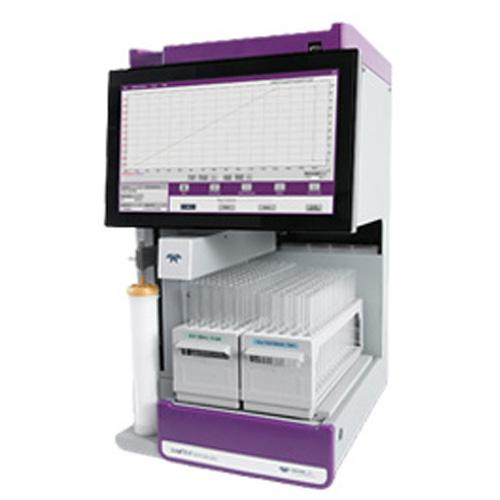
Flash chromatography is a widely used purification technique in organic and pharmaceutical laboratories for the rapid separation of chemical compounds from complex mixtures. As an advanced form of preparative column chromatography, it utilizes pressurized gas or pumps to force the mobile phase through a column packed with a stationary phase, typically silica gel. This controlled pressure significantly accelerates the separation process compared to traditional gravity-driven column chromatography, reducing purification times from several hours or days to just minutes. The technique operates on the principle of differential adsorption, where compounds in a mixture interact differently with the stationary phase and travel through the column at varying rates. As a result, individual components can be effectively separated and collected in distinct fractions. Flash chromatography is highly versatile and can accommodate a broad range of sample sizes, from milligram-scale research applications to larger-scale industrial processes. Modern flash chromatography systems often incorporate automated controls, gradient elution capabilities, and advanced detection methods, enhancing reproducibility, efficiency, and accuracy. It is extensively applied in drug discovery, natural product isolation, chemical synthesis, and quality control laboratories. Owing to its speed, reliability, and adaptability, flash chromatography has become an indispensable tool for chemists, enabling the efficient purification of compounds and supporting innovation across scientific and industrial research fields. For Enquiry Send Email Or Contact Septech Marketing LLP Now!

6814772a5d263414004dd4a4 Card 2

product image
Chromatography

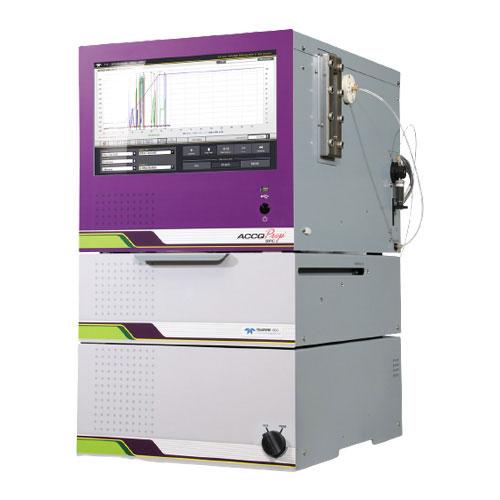
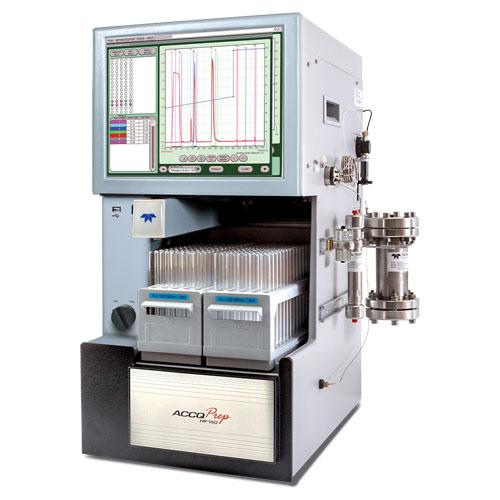
The ACCQPrep HP150 is a user-friendly preparative HPLC system designed to simplify purification workflows by eliminating unnecessary and complex method parameters commonly found in traditional HPLC systems. Built for efficiency and ease of use, it delivers high performance without requiring extensive training. Key Features & Benefits ✅ Simplified Operation Intuitive control via PeakTrak® software Eliminates overly complex method setup Designed specifically with chemists in mind ✅ Fully Integrated Software Embedded system — no stand-alone PC required Compact footprint with built-in touchscreen interface Free software updates to adapt to evolving lab needs ✅ Smart Lab Monitoring Active solvent level monitoring Waste level detection to prevent overflow Reduced risk of solvent spills and lab interruptions ✅ Intelligent Fraction Collection RFID-enabled collection racks Prevents missed or overfilled test tubes Improves collection accuracy and efficiency Designed for Modern Prep Labs:The ACCQPrep HP150 combines automation, safety features, and simplified controls into a compact preparative HPLC platform. It is ideal for laboratories seeking: *Reliable compound purification *Reduced operator error *Streamlined workflows *Compact, all-in-one HPLC systems For Enquiry Send Email Or Contact Septech Marketing LLP Now!

6814772a5d263414004dd4a4 Card 2

product image
Chromatography

Supercritical Fluid Chromatography (SFC) is an advanced separation technique that uses a supercritical fluid—most commonly carbon dioxide (CO₂)—as the mobile phase. In its supercritical state, CO₂ exhibits properties of both a gas (low viscosity, high diffusivity) and a liquid (solvation strength), enabling fast, efficient, and high-resolution separations. SFC bridges the gap between gas chromatography (GC) and liquid chromatography (LC), offering the speed of GC with the versatility of LC. How SFC Works When CO₂ is brought above its critical temperature and pressure, it becomes a supercritical fluid. In this state, it: Penetrates stationary phases efficiently (like a gas) How SFC Works When CO₂ is brought above its critical temperature and pressure, it becomes a supercritical fluid. In this state, it: *Penetrates stationary phases efficiently (like a gas) *Dissolves analytes effectively (like a liquid) *Enables rapid mass transfer and shorter run times Modifiers such as methanol or ethanol are often added to enhance solubility for polar compounds. Dissolves analytes effectively (like a liquid) Enables rapid mass transfer and shorter run times Modifiers such as methanol or ethanol are often added to enhance solubility for polar compounds. Key Components of an SFC System An SFC system typically includes: *Pump – Delivers liquid CO₂ and organic modifiers at precise flow rates *Injector – Introduces the sample into the mobile phase *Column oven – Maintains controlled temperature for reproducibility *Chromatographic column – Packed with stationary phase for separation *Detector – Commonly UV, PDA, MS, or ELSD for compound detection *Back Pressure Regulator (BPR) – Maintains pressure to keep CO₂ in its supercritical state Advantages of SFC: ✔ Faster separations compared to traditional HPLC ✔ High efficiency and sharp peak resolution ✔ Reduced solvent consumption (greener technology) ✔ Easy solvent removal due to volatile CO₂ ✔ Ideal for chiral separations ✔ Compatible with mass spectrometry detection Applications of SFC :SFC is widely used in: *Pharmaceutical analysis – Chiral drug separation, impurity profiling *Environmental testing – Pesticides and pollutant analysis *Natural products research – Plant extracts and bioactive compounds *Chemical research & synthesis labs – Reaction monitoring and purification Why SFC is Growing in Popularity Supercritical Fluid Chromatography offers a powerful alternative to traditional HPLC by providing: *Higher throughput *Improved selectivity *Lower operational costs *Environmentally friendly workflows As laboratories increasingly prioritize speed, sustainability, and analytical performance, SFC continues to gain adoption in both analytical and preparative-scale applications.