
A PeriXus pump cannot be sized reliably from a maximum litres-per-hour figure alone. You will need to convert process throughput into a target operating point, match tubing and pressure conditions, account for Ahmedabad’s installation environment, and confirm the result with a measured calibration test.
Key takeaways
- Calculate minimum, nominal, and maximum flow before selecting the pump.
- Match tubing bore and speed to the required operating range.
- Check Ahmedabad voltage, ambient temperature, ventilation, and installation space.
- Measure delivered flow under process conditions before approving the pump.
Define the continuous-processing operating point before choosing a pump
Calculate the operating point as a range, not a single litres-per-hour number, before choosing a PeriXus pump. Convert production throughput, batch volume, dosing ratio, and required residence time into the lowest, nominal, and highest flow the process must hold. Include an acceptable flow-deviation band, such as ±2%.
| Operating variable | What to calculate | Why it changes selection |
|---|---|---|
| Flow | Target rate and low-to-high operating range | Determines tubing bore and speed |
| Pressure | Static head, line losses, filters, valves, and discharge pressure | Reduces delivered flow and loads the tubing |
| Fluid load | Temperature, viscosity, solids concentration, particle size, and chemical compatibility | Changes friction, wear, and tubing material |
| Duty | Continuous hours, starts and stops, and required service life | Exposes unsuitable speed or tubing fatigue |
| Installation | Available voltage, frequency, earthing, and control signal | Excludes incompatible motor-drive combinations |
Specify tubing material, internal diameter, wall thickness, connection format, and separate pressure limits for the tubing and pump head. A rupture can occur even while the motor runs normally, so define a pressure sensor, relief path, or shutdown interlock for unattended service.
This calculation defines the PeriXus peristaltic pump size for continuous processing in Ahmedabad. Do not select from maximum advertised flow alone: that figure often assumes one tubing configuration, low backpressure, and high speed. Require performance data at your specified flow, pressure, temperature, and tubing combination.
Match PeriXus tubing bore and pump speed to the required flow
Choose the smallest tubing bore that delivers the target flow at a reasonable speed and discharge pressure. The PeriXus peristaltic pump flow rate depends on tubing internal diameter, pump-head displacement per revolution and rotational speed—not the motor alone. Use the manufacturer’s curve for the exact tubing, then verify output at actual backpressure.
For PeriXus pump size selection, specify:
- Tubing internal diameter, wall thickness and material: a larger bore increases displacement per revolution but also increases hold-up volume, minimum practical batch volume, tube cost and product loss during line clearing.
- Fluid properties: record viscosity at operating temperature, slurry concentration, particle size, gas entrainment and shear sensitivity. Viscosity alone does not predict achievable flow or tube life.
- Hydraulic load: include suction lift, line length, elevation, fittings and required discharge pressure. A water trial at zero backpressure cannot validate a process fluid.
- Duty: state continuous runtime, speed range and an acceptance band for delivered flow. Tube elasticity changes with use, so replace or recalibrate when measured flow leaves that band rather than relying only on a calendar interval.
Do not select from the maximum advertised flow. That figure usually applies to a particular tube, high speed and low pressure; require a curve or test result at your specified flow, temperature, tubing and pressure.
Lower speed within the validated range reduces wear, while excessive speed or occlusion can shorten tube life and cause flow drift.
Include Ahmedabad ambient, electrical and installation conditions
A correctly sized continuous processing pump in ahmedabad can still overheat, trip, or lose flow if the site specification ignores local conditions. Confirm operation at the actual installation ambient, not an unspecified laboratory temperature; summer heat can reduce motor and drive cooling margin.
| Site condition | What changes | What to specify or verify |
|---|---|---|
| Ambient temperature | Motor heating, drive derating, tubing life and fluid temperature | Maximum and minimum room temperature, enclosure ventilation, and cooling clearance |
| Dust and monsoon humidity | Blocked vents, corrosion, or moisture-related electrical faults | Enclosure ingress protection, filtered ventilation, and cleaning access |
| Electrical supply | Incorrect voltage or frequency can cause nuisance trips or unstable speed | Measured site voltage, phase, frequency, isolator rating, earthing, and protection |
| Installation position | Poor access or unsupported tubing can increase stress, leaks, and maintenance time | Level mounting, suction-line routing, discharge support, drain provision, and tube-change clearance |
Do not approve a 230 V, 50 Hz configuration by assumption. Record the available supply at the proposed location and ask the supplier to confirm motor, controller, and earthing compatibility. A generator, UPS, or voltage fluctuation also belongs in the specification.
- Require the rated operating ambient and cooling method in writing.
- Match the ingress-protection rating to washdown, dust, and humidity exposure.
- Check that Ahmedabad site temperature, electrical supply, ventilation, and service access appear on the quotation, alongside tubing and pressure conditions.
Validate delivered flow instead of trusting the nominal rating
Do not accept the maximum advertised flow as a continuous-process guarantee. The PeriXus peristaltic pump flow rate depends on tubing internal diameter, pump-head displacement per revolution, speed, fluid temperature, and discharge pressure. Validate the selected tubing and head with the actual process fluid, not water at zero backpressure.
- Set three test points: the lowest required flow, the nominal operating flow, and the highest required flow. Record pump speed, suction conditions, discharge pressure, fluid temperature, tubing material, and tubing age at each point.
- Collect the discharge for a measured interval into a weighed vessel. Convert mass to volume using the fluid density at test temperature, then calculate flow as collected volume divided by collection time.
- Repeat each point at least three times and calculate the mean, range, and percentage deviation from target. Repeat the test after reaching operating temperature; tubing softening and thermal expansion can change delivery.
- Adjust speed to create a calibration table linking rpm to delivered flow at each pressure condition. Recheck the table after replacing tubing, changing fluid viscosity, or altering fittings.
Set acceptance limits before testing, such as the permitted flow deviation, pressure stability, and pulsation level. A pump that meets litres per hour but causes unstable column pressure, residence time, weighing, or detector signals still fails the process test.
If pulsation exceeds the process limit, test the approved damper, accumulator, multihead arrangement, or control filtering at the same operating points.
Turn the selection into a reproducible procurement specification
Approve only a quotation that lets another engineer reach the same PeriXus peristaltic pump size for continuous processing in Ahmedabad from the same inputs. State target flow, permitted deviation, discharge pressure, fluid temperature, solids or particle content, duty cycle, tubing material and size, and available voltage and frequency.
- Identify the exact pump-head configuration, tubing part number, internal diameter, wall thickness, connection format, wetted materials, maximum speed, and pressure limit.
- Attach the manufacturer’s performance curve for that tubing, showing usable flow at the specified backpressure rather than maximum flow at zero pressure.
- Define the acceptance test: low, nominal, and high flow or pressure points; test duration; calibration method; collection-weighing method; and the allowed flow-deviation band.
- Record suction lift, line length, fittings, temperature, viscosity, and particle size used during testing. These inputs make the PeriXus pump size selection reproducible.
- Require written confirmation of rated operation at the Ahmedabad installation ambient, motor and drive cooling, ingress protection, earthing, and site voltage and frequency.
- Name Indian sources and lead times for replacement tubing, and specify recalibration or tube replacement when measured flow leaves the agreed band, not only after a calendar interval.
- Put the recommended maintenance interval, warranty response, commissioning attendance, troubleshooting contact, and spare-parts holding plan in the local support schedule.
Ask Septech Marketing LLP to place these details on the quotation rather than leaving them in a verbal recommendation. Without them, a continuous processing pump in Ahmedabad cannot be compared fairly or approved with confidence.
Related product
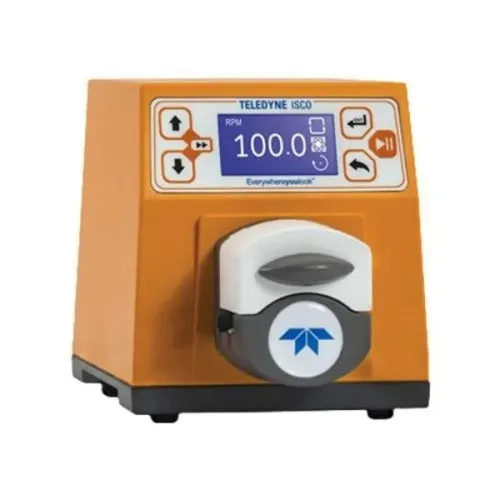
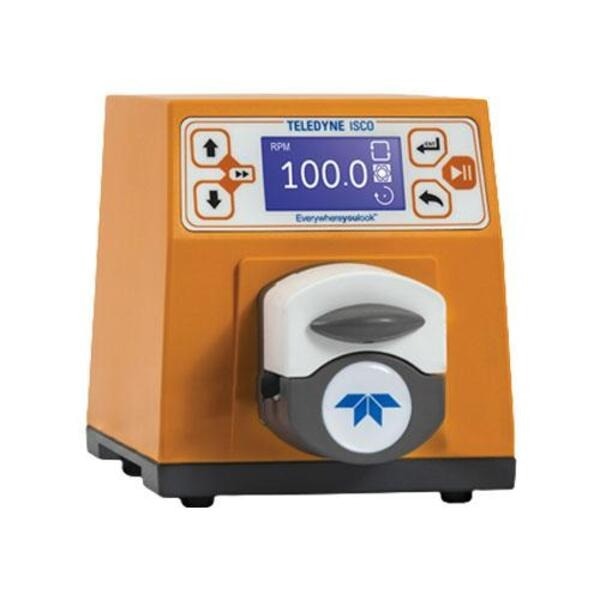
 | Pumps The Teledyne ISCO PeriXus Peristaltic Pump is designed for both laboratory use and continuous processing applications. View product → |
Frequently asked questions
How do you define the operating point for continuous processing?
Convert production throughput, batch volume, dosing ratio, and residence time into minimum, nominal, and maximum flow values. Add the permitted deviation, such as ±2%, to the specification.
How do you select a PeriXus pump size?
Choose tubing with a bore that covers the required flow range, then select a pump and speed that operate within their controllable range rather than at the nominal rating limit.
Which Ahmedabad conditions belong in the pump specification?
State the available electrical supply, ambient temperature, ventilation, installation area, tubing routing, process-fluid temperature, and any dust or moisture exposure.
Why must you validate the PeriXus peristaltic pump flow rate?
Tubing material, bore, wall thickness, pump speed, suction lift, discharge pressure, fluid viscosity, and tubing wear all affect delivered flow. Measure the actual output using the intended tubing and process conditions.
What belongs in a reproducible PeriXus pump procurement specification?
Record the minimum, nominal, and maximum flow, tolerance, fluid properties, tubing material and dimensions, pressure, temperature, duty cycle, electrical supply, controls, validation method, and acceptance criteria.