
A PeriXus transfer fault can originate in the tube, pump head, fluid path, process conditions, or electrical drive. You will be able to isolate those causes safely, verify delivered flow, protect product quality, and decide when local technical support is required.
Key takeaways
- Stop, isolate, and depressurise the line before opening the fluid path.
- Replace flattened, hardened, swollen, or chemically incompatible tubing.
- Check occlusion, tubing size, speed, and calibration before changing settings.
- Escalate recurring faults with pump logs, batch details, and measured flow results.
Secure the Fluid Path Before Diagnosing the Pump
Stop the PeriXus pump first, isolate it from the process, and depressurise the line. Do not loosen a connector or remove tubing while pharmaceutical fluid remains pressurised; an apparently simple blockage can release product or expose the operator.
Use this order for peristaltic pump troubleshooting pharmaceutical fluid transfer:
- Confirm the inlet and outlet orientation, open valves, unclogged lines, and correct rotation direction. A reversed head or closed discharge valve can create no-flow or excessive back pressure.
- Inspect the suction-side tube, connectors, clamps, tube-end cuts, and pump-head seating. An air leak can cause bubbles, loss of prime, intermittent flow, and under-delivery without visible liquid leakage.
- Check that the installed tubing matches the specified inner diameter, wall thickness, material, hardness, and pressure rating. Tubing is the pump’s main wear component; a nominally similar replacement can deliver a different volume or fail under occlusion.
- Check the formulation against the tubing, liner, connectors, and seals for compatibility with concentration, temperature, contact time, cleaning agent, and sterilisation cycle. The pump housing’s compatibility does not prove wetted-path compatibility.
- Verify the electrical supply, nameplate voltage, fuse, grounding, connectors, overload protection, and controller indications. Never bypass a protective device or run a damaged tube assembly.
After the path is secure, calibrate at the intended tubing size, speed, temperature, and discharge back-pressure by collecting and weighing the actual fluid. Pump rpm alone does not specify delivered flow.
Match Each PeriXus Symptom to Its Likely Cause
A symptom points to a different failure zone, so check the fluid path before blaming the motor or controller.
| Symptom | Likely cause | Distinguishing check |
|---|---|---|
| No flow | Incorrect tubing seating, closed valve, blocked line, wrong rotation, or loss of prime | Confirm inlet-to-outlet direction, tube compression, open valves, and liquid at the suction side |
| Low flow | Worn or incompatible tubing, excessive back pressure, air ingress, or incorrect calibration | Inspect tube elasticity and connectors; measure collected fluid at the intended rpm and pressure |
| Pulsation | Air in the line, uneven occlusion, or a damaged tube | Look for bubbles and inspect the tube where the pump head compresses it |
| Reverse flow | Wrong rotation direction or inadequate occlusion | Check the direction setting and whether the pump head fully closes the tube |
| Leaks | Split tubing, loose connector, chemically attacked fitting, or poor tube-end cut | Depressurise, then inspect every joint; remember suction leaks can admit air without showing liquid |
| Overheating | Excessive back pressure, prolonged high speed, blocked ventilation, or drive overload | Compare pressure and rpm with limits; stop if the head or motor becomes hot |
| Unusual noise | Mis-seated tubing, bearing or head damage, or foreign material | Stop the pump and inspect the head; do not run a damaged tube assembly |
| Alarm | Supply, fuse, overload, grounding, connector, or controller fault | Check the nameplate supply and alarm code without bypassing protection |
| Intermittent stopping | Air ingress, unstable power, overload, or controller fault | Record when stopping occurs and correlate it with pressure, temperature, and the alarm code |
For perixus fluid transfer issues, record pump-head and tubing part numbers, target and measured flow, rpm, temperature, pressure, rotation, photographs, and time since tube replacement. This detail accelerates diagnosis of perixus pump problems in ahmedabad.
Check Tubing, Occlusion, and Delivered-Flow Accuracy
An incorrect tube can make a correct pump speed deliver the wrong dose. Verify inner diameter, wall thickness, elasticity, material compatibility, temperature range, and pressure rating against the formulation and transfer conditions. A tube that swells, hardens, flattens, or chemically degrades changes volume per revolution and can introduce extractables or leaks.
Occlusion controls how completely the rollers close the tube. Too little occlusion allows backflow and under-delivery; excessive occlusion increases heat, tube wear, motor load, and pulsation. Inspect the pump head for worn rollers, damaged tracks, incorrect tube seating, and poor cover closure.
A blocked discharge can raise pressure rapidly, while a suction-side air leak causes bubbles, loss of prime, and apparent low flow without visible liquid leakage.
For peristaltic pump troubleshooting pharmaceutical dosing, calibrate by collecting and weighing the actual fluid at the intended tubing size, rpm, temperature, transfer time, and discharge back-pressure. Do not treat rpm as a delivered-flow specification. Recalibrate after changing tubing, formulation viscosity, pump-head parts, or line resistance.
- Confirm the tube is fully seated and the inlet and outlet follow the pump-head direction.
- Check tube ends, connectors, clamps, and fittings for cuts, looseness, chemical attack, or concealed air entry.
- Record tare weight, collected-fluid weight, run time, rpm, temperature, and back-pressure.
- Repeat the collection at the planned dose volume and investigate drift, pulsation, or unexplained variation before release.
Keep Troubleshooting Inside Pharmaceutical Controls
Treat peristaltic pump troubleshooting pharmaceutical transfer as a controlled activity, not an informal repair. Stop the transfer, identify the affected material, and place the batch and flow path under quarantine until Quality approves the next action.
- Record the pump ID, tubing and connector lot numbers, formulation, batch number, operator, start and stop times, speed, direction, pressure, alarms, delivered volume, and any visible defect.
- Preserve the tube assembly and connection state for investigation. Do not discard, rinse, or reconnect it before documenting the failure and taking required samples.
- Clean and sanitise only under the approved procedure. Check the actual formulation, concentration, temperature, contact time, cleaning agent, and sterilisation cycle against the wetted tubing, liner, connectors, and seals; housing compatibility proves none of these.
- Treat the pump path as non-sterile unless the complete assembly has a validated sterilisation or sanitisation process. Use qualified aseptic connectors, protect exposed ends, and perform an integrity check after reconnection.
- Open a deviation for contamination risk, incorrect volume, lost prime, damaged tubing, pressure excursion, or any unplanned intervention. Have Quality assess batch impact, approve disposition, and assign corrective and preventive actions.
A PeriXus pump does not sterilise product. Restart only after documented clearance, approved replacement parts, verified connections, and confirmation that the defined cleaning and aseptic controls remain valid.
Know When to Escalate PeriXus Pump Problems in Ahmedabad
Stop hands-on troubleshooting when the fault threatens product quality, operator safety, or equipment integrity. Request qualified peristaltic pump support in Ahmedabad for repeated shutdowns, drive alarms, overheating, damaged tubing, unexplained reverse rotation, persistent loss of prime, or flow that remains inaccurate after correct tubing installation and calibration.
Escalate before restarting if:
- The electrical supply, fuse, grounding, connector, or nameplate requirement is uncertain.
- A tube, pump head, fitting, or seal is cracked, chemically attacked, distorted, or unable to maintain pressure.
- The transfer involves an aseptic connection, sterilisation cycle, or sanitisation agent without documented flow-path compatibility.
- The measured dose differs from the approved limit after collection-and-weigh calibration at the actual speed, temperature, tubing size, and back-pressure.
- You suspect contamination, a breached sterile path, or an undocumented process deviation.
Prepare a useful service record before calling. Include the pump-head and tubing part numbers, product or surrogate, target and measured flow, rpm, suction lift, discharge pressure, temperature, rotation direction, alarm code, tube and connector photographs, and time since the last tube change. Do not bypass overload protection or run a damaged tube assembly.
For perixus pump problems in Ahmedabad, Septech Marketing LLP can help identify whether the issue belongs with the fluid path, drive, or application setup. Ask for a qualified perixus peristaltic pump for troubleshooting in Ahmedabad when remote advice cannot verify those conditions safely.
Related product
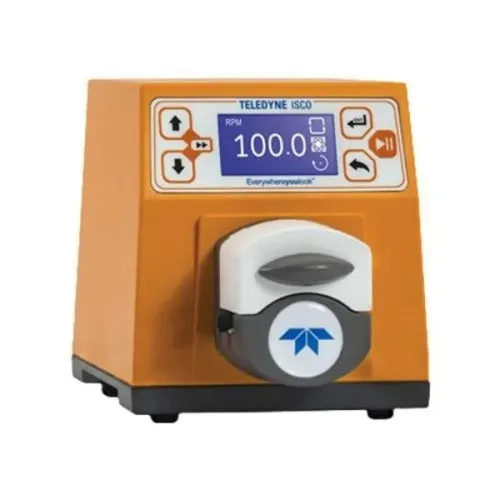
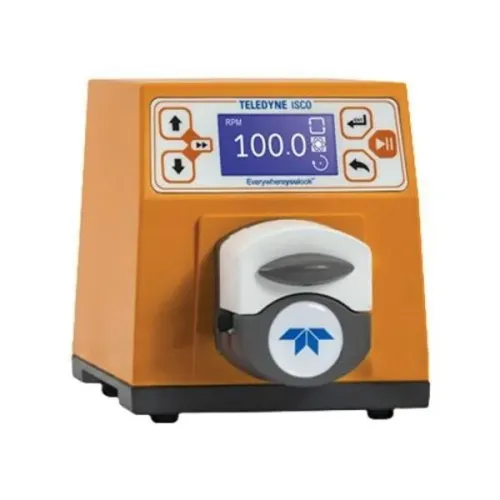
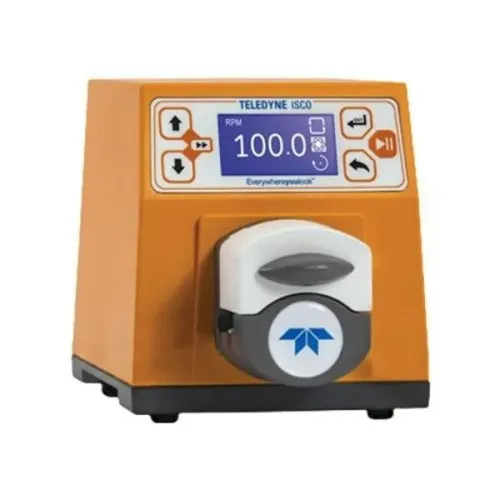
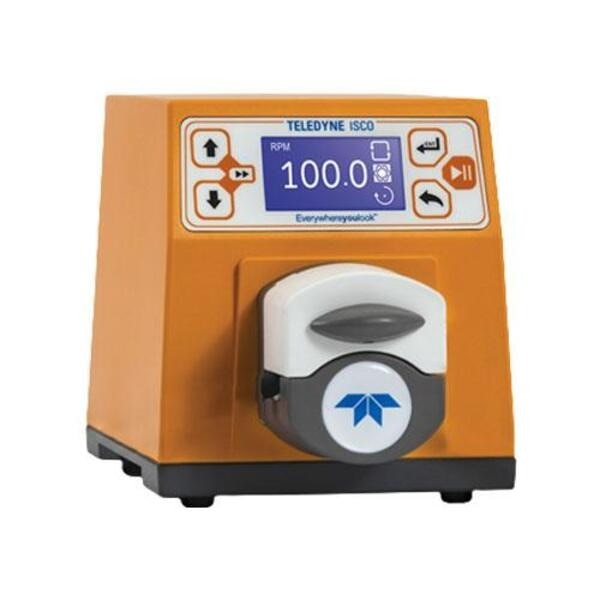
 | Pumps The Teledyne ISCO PeriXus Peristaltic Pump is designed for both laboratory use and continuous processing applications. View product → |
Frequently asked questions
What should you do before troubleshooting a PeriXus pump?
Stop the pump, isolate it from the process, depressurise the line, and prevent contact with pressurised pharmaceutical fluid before loosening connectors or removing tubing.
What causes common PeriXus fluid-transfer issues?
Inspect the tubing, occlusion setting, connectors, inlet supply, air leaks, tubing compatibility, and pump speed. Flattened or damaged tubing is a common cause of unstable flow.
How do you check delivered-flow accuracy on a PeriXus pump?
Confirm the tubing size and condition, verify the occlusion setting, measure the delivered volume over a defined time, and compare the result with the required process flow.
When should you escalate PeriXus pump problems in Ahmedabad?
Escalate recurring flow errors, unexplained pressure changes, control faults, leakage, contamination risk, or failures that remain after documented tubing and process checks.