
Botanical extracts range from thin ethanol-water mixtures to resinous concentrates containing particles, oils and precipitated compounds. By the end, you will be able to match those fluids and workflows to the PeriXus, identify where it is a poor choice, and define the tests required before purchase or validation.
Key takeaways
- Use PeriXus for enclosed, low-pressure transfer and dosing.
- Match tubing and every wetted component to the extract and cleaning method.
- Check viscosity, particles, pulsation and pressure before trusting dose accuracy.
- Choose another pump for stable, high-pressure HPLC solvent delivery.
Which natural-products workflows fit a PeriXus pump?
A PeriXus pump fits natural-products work when you need enclosed, low-pressure transfer or dosing—not stable, high-pressure HPLC solvent delivery. For PeriXus pump laboratory use, judge the actual fluid path, pressure and dosing tolerance.
| Workflow | Fit | Main caution |
|---|---|---|
| Botanical-extract transfer, tincture dispensing | Good | Confirm tubing compatibility and dose repeatability |
| Filtration or evaporation feed | Good | Pulsation can disturb filters, balances or evaporation rates |
| Extraction-liquid circulation and fermentation sampling | Good | Check shear, foaming and contamination between batches |
| Low-pressure column loading and fraction transfer | Good | Clarify particles before they reach the column |
| Analytical or preparative HPLC solvent delivery | Weak | Verify pressure, flow stability and gradient performance from the exact model documentation |
A PeriXus peristaltic pump for natural products laboratories can handle cell-containing samples, crude slurries, essential oils and viscous concentrates more readily than a pump with narrow valves. That tolerance does not protect the next component: particles can clog filters or columns, while resins, pigments and oils can contaminate tubing.
Use the pump only when these answers are acceptable:
- Pressure remains below the documented limit.
- Moderate dosing accuracy is sufficient.
- Pulsation will not blur fractions, destabilise an evaporation feed or disturb a detector.
- The allowed shear matches the cells or extract.
- Tubing can be replaced or cleaned without cross-contamination.
Conventional HPLC requires stable flow against column backpressure and reliable gradient formation. Tubing compression and pulsation make the PeriXus a weak choice for that duty unless the exact model confirms the required pressure, flow stability and connection arrangement.
How should you choose tubing and the complete wetted path?
Choose the tube by chemistry and mechanics, not by the pump housing. For a PeriXus peristaltic pump in natural products work, check the exact tubing compound against ethanol-water mixtures, methanol, acetonitrile, water, acetone, ethyl acetate, hexane, chlorinated solvents, and strongly acidic or basic mixtures.
| Component | What to verify | What can go wrong |
|---|---|---|
| Tubing | Internal diameter, wall thickness, elasticity, maximum pressure and compound | Swelling changes flow; embrittlement causes leaks; permeation and extractables contaminate samples |
| Pump head | Rotor compression, occlusion setting and permitted tube size | Excess compression accelerates fatigue; insufficient compression causes slip or leakage |
| Connections | Connector material, bore, seals and pressure rating | A compatible tube can still fail at a fitting or seal |
| Other wetted parts | Reservoirs, filters, valves, waste containers and tubing joins | Chemical attack, vapour release or blockage defeats the tube’s compatibility rating |
Swelling, compression set, temperature and ageing alter delivered volume. Polyphenols, terpenes, pigments and lipids can adsorb to tubing or extract its additives, changing recovery and chemical background. Condition new tubing with a suitable solvent, then run a representative-extract blank or recovery test before quantitative use.
For PeriXus pump suitability with volatile or flammable solvents, verify the complete setup:
- Confirm vapour containment, leak control and tubing permeation.
- Check every seal, fitting, reservoir, filter and waste container.
- Apply the laboratory’s flammable-liquid and ignition-control procedures.
A solvent-compatible tube alone does not prove that the assembly controls vapour, leakage or ignition risk.
What will viscosity, particles and pulsation do to your result?
A displayed flow rate is not a delivered-volume guarantee for a peristaltic pump for botanical research. Viscosity from dissolved solids, low temperature or concentration forces higher rotor torque and pressure, while foaming, crystallisation and precipitated compounds make occlusion less consistent.
Suspended plant material can pass through the tubing without a valve or narrow pump orifice, but it can still abrade the tube, clog a downstream filter or column, and change the extract composition from one dose to the next. Clarify the slurry when composition matters, and control temperature before calibrating.
Pulsation creates different problems. It can blur fraction boundaries, disturb an evaporation feed, produce an unstable spray, or add noise to a balance or detector. For smoother delivery, use:
- A slower rotor speed to reduce pulse amplitude and pressure peaks
- A pulse dampener or larger downstream volume
- Clarification and filtration protection before sensitive equipment
- Temperature control to prevent viscosity shifts and crystallisation
- A different pump architecture when near-continuous, high-pressure or gradient-stable flow is essential
Repeated occlusion eventually reduces tubing elasticity. Flow then drifts, leaks develop and rupture becomes possible, especially under pressure or solvent exposure. Set replacement by duty cycle, pressure, solvent contact and calibration drift—not the calendar alone. Recalibrate with the actual extract after tubing changes and extended operation.
That evidence, rather than the nominal setting, determines PeriXus pump suitability.
Which specifications and controls must you verify before purchase?
A document review is only the starting point for perixus pump laboratory use. Obtain the exact model’s flow-rate range, pressure capability, permitted tubing sizes, pump-head options, pulse behaviour, speed resolution, repeatability and stated accuracy. A nominal manufacturer flow range is not a validation result.
| Check | Documentation question | Method-specific evidence |
|---|---|---|
| Delivery | What flow and pressure limits apply to your tubing and extract? | Delivered mass or volume at the intended setting |
| Controls | Are timing, calibration, recipes, alarms and remote commands supported? | Repeatable operation and recorded fault responses |
| Integration | Can it communicate with your chromatography or automation system? | Successful command, status and data exchange |
| Stability | How does temperature, tubing replacement or extended running affect flow? | Drift and recovery against the existing method |
Ask whether the controller supports speed control, timed dispensing, flow calibration, recipe storage, alarm handling, remote commands and integration with your chromatography or laboratory-automation system. Septech Marketing LLP can provide the current PeriXus manual, tubing-compatibility documents, pressure limits and integration details; your laboratory must test its own extract.
For a perixus peristaltic pump for natural products laboratories, deliver the actual solvent or extract into a graduated vessel or onto a balance for a defined run time. Record mass or volume, repeat the test, then repeat it after a temperature change, tubing replacement and extended operation.
Set acceptance criteria for delivered amount, short-term repeatability, drift and extract recovery against the existing method. Reject the setup if it fails the method’s limits, even when the published flow range looks suitable.
Related product
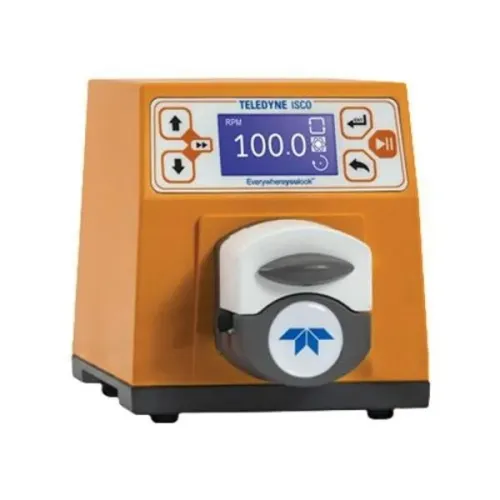
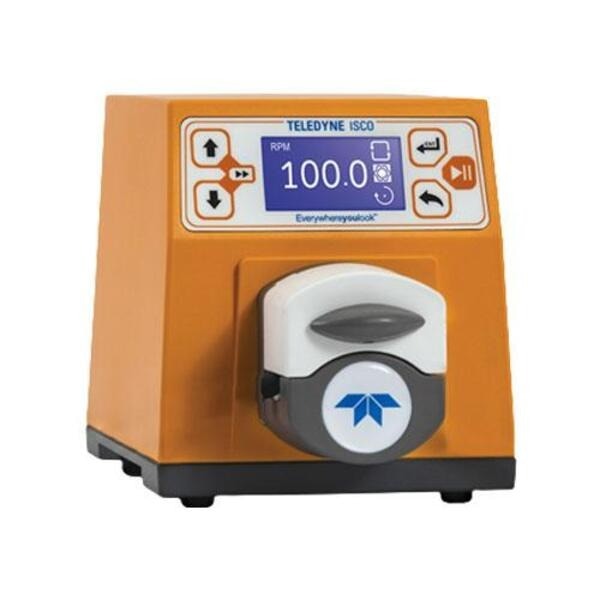
 | Pumps The Teledyne ISCO PeriXus Peristaltic Pump is designed for both laboratory use and continuous processing applications. View product → |
When is the PeriXus the right choice—and when is it not?
Choose the PeriXus when your process needs enclosed, low-shear, low-pressure transfer, rapid tubing changes, tolerance of some suspended material, and moderate dosing accuracy. That makes a PeriXus peristaltic pump for natural-products work suitable for solvent transfer, filtration or evaporation feed, fraction movement, and low-pressure column loading.
Choose another pump when the method requires high pressure, very low pulsation, precise HPLC-gradient formation, minimal tubing extractables, or validated delivery of viscous, chemically aggressive extracts. A PeriXus is a transfer or dosing device, not automatically a preparative-HPLC pump.
For a peristaltic pump for botanical research, test the real fluid rather than trusting the category or nominal flow range.
Sample-path changeover determines whether strongly coloured, resinous, oily, or bioactive extracts can share the system safely.
| Option | Advantage | Risk or requirement |
|---|---|---|
| Disposable tubing | Fastest changeover and lowest carryover risk | Confirm chemical compatibility, waste handling, and replacement cost |
| Documented cleaning and rinse | Less waste and lower recurring consumption | Define solvent, volume, contact time, inspection, and carryover acceptance |
Make the PeriXus pump suitability decision with this go/no-go check:
- Confirm every wetted tube, seal, connector, filter, reservoir, and waste container suits the extract and solvent.
- Protect filters and columns from particles, precipitates, and excessive pressure.
- Verify controls for flammable solvents, vapour, leakage, and ignition sources.
- Test the actual extract at operating temperature and viscosity.
- Measure delivered mass or volume, repeatability, recovery, and drift.
- Inspect tubing for swelling, flattening, cracks, and ageing; document alarms and performance changes.
Frequently asked questions
Which natural-products workflows fit a PeriXus pump?
PeriXus suits enclosed, low-pressure transfer and dosing of botanical extracts, buffers, suspensions and other fluids when the tubing forms the fluid path. It is not the right choice for stable, high-pressure HPLC solvent delivery.
How should you choose tubing and the complete wetted path?
Match the tubing, connectors, valves and other wetted parts to the extract’s solvents, temperature, particles and cleaning process. Confirm chemical compatibility, internal diameter, wall thickness, sterilisation needs and replacement intervals.
What will viscosity, particles and pulsation do to your result?
High viscosity reduces flow and increases drive load; particles can settle, abrade tubing or block narrow fittings; pulsation affects dosing and sampling. Test the complete fluid path at the intended flow rate and pressure.
Which specifications and controls must you verify before purchase?
Verify the usable flow range, pressure limit, tubing sizes, speed control, direction control, priming and calibration features, wetted materials, alarm functions and the accuracy required by your workflow.
When is a PeriXus pump the right choice—and when is it not?
Choose it when you need contained, gentle, low-pressure fluid handling with simple tubing replacement. Select another pump when your method demands high pressure, near-pulsation-free flow, high metering accuracy or compatibility with HPLC solvent delivery.