
A syringe pump and a peristaltic pump move water in fundamentally different ways, so a nominal flow-rate comparison can lead you to the wrong choice. By comparing dosing behaviour, pressure, sample compatibility, tubing, contamination risks and operating duty, you can match the pump to your water-testing method or build a practical hybrid system.
Key takeaways
- Choose syringe pumps for precise finite doses and peristaltic pumps for continuous transfer.
- Compare both pumps at the actual flow rate, pressure and dose volume.
- Check particles, bubbles, tubing compatibility and carryover before selecting a pump.
- Combine a syringe pump for dosing with a peristaltic pump for sample transfer.
Choose the pumping architecture for the water-testing task
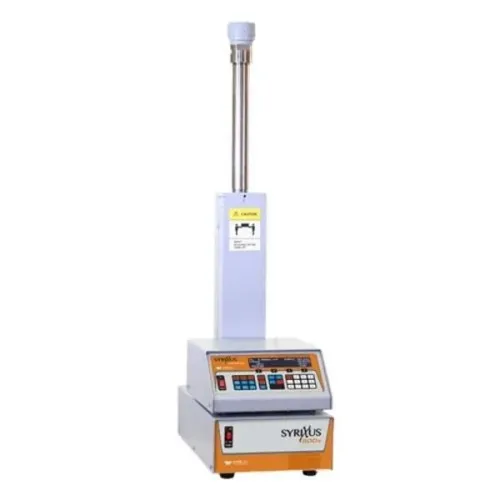
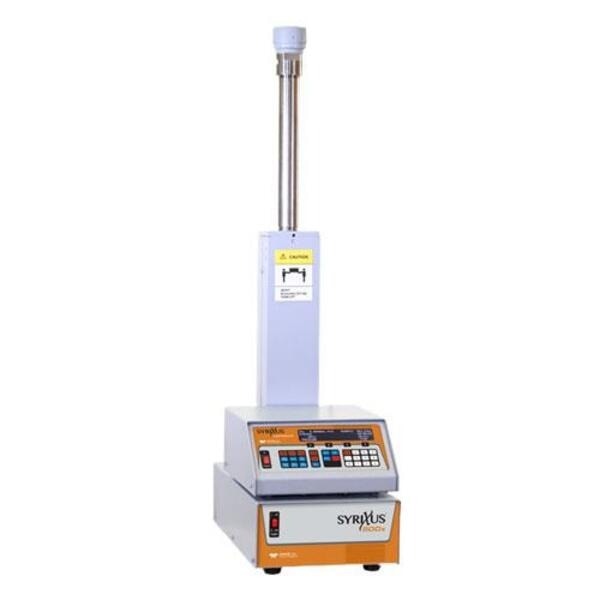
A comparison of Syrixus syringe pumps versus peristaltic pumps starts with how each one moves liquid. A syringe pump advances a plunger through a fixed chamber, delivering a finite, positively displaced volume. A peristaltic pump moves liquid by compressing flexible tubing with rollers, creating flow without placing the sample inside a piston or valve.
| Option | Operating behaviour | Best-fit water-testing tasks |
|---|---|---|
| Syringe pump | Repeatable finite aliquots; precise low-volume displacement; delivery stops during refill | Standards, internal standards, reagent doses, standard additions and intermittent batch analysis |
| Peristaltic pump | Continuous transfer through tubing; output is naturally pulsating | Larger sample transfer, recirculation, filtration feeds and continuous online-analyser flow |
| Hybrid system | Peristaltic movement combined with syringe metering | Continuous sample feed with precise reagent or standard addition |
A syringe pump versus peristaltic pump choice also depends on uninterrupted operation. Syringe delivery stops for refill unless you add a second syringe, valve arrangement or reservoir-switching design; peristaltic flow continues but pulsates with roller count, speed, tubing geometry and backpressure.
For raw water and wastewater, peristaltic pumping suits transfer, filtration and recirculation when particles and volume matter. Drinking water, groundwater and seawater may suit either architecture: use a syringe pump for defined aliquots or low-volume dosing, and a peristaltic pump for sustained flow. The matrix and analytical method—not pump type alone—determine suitability.
Compare flow, pressure, pulsation and controllable dose at the real operating point
Compare performance at the installed operating point, not the catalogue flow range. Request flow at the selected syringe diameter or tubing bore, minimum practical flow, maximum discharge pressure, suction lift, tubing length and bore, filter resistance, elevation and fluid viscosity. An environmental laboratory pump comparison that omits these conditions is incomplete.
| Measure | Syringe pump | Peristaltic pump |
|---|---|---|
| Flow | Depends on syringe diameter and plunger displacement | Depends on tubing, roller speed, occlusion and backpressure |
| Pressure | Positive displacement; check seal and valve limits | Check tubing pressure rating and occlusion under load |
| Pulsation | Low during a stroke, but refill or valve events interrupt delivery | Set by roller count, speed, tubing geometry and backpressure |
| Dose control | Finite, commanded volume | Rate-based; integrate flow for dose |
Syringe volume depends on internal diameter and plunger travel. Changing syringe size changes force, dead volume, minimum practical flow and accuracy. Motor resolution is only the smallest commanded increment; delivered volume also reflects seal slip, valve leakage, air, pressure, temperature and syringe tolerances.
Peristaltic rate drifts as tubing elasticity, age, occlusion and temperature change. Calibrate with the installed tubing or syringe, using gravimetric weighing or volumetric collection and the actual water matrix.
Separate discharge pressure from suction performance. A pump that reaches the required outlet pressure can still fail to aspirate through a long narrow intake, clogged filter or elevated line. For a water-testing syringe pump, record both tests.
Match the pump to particles, bubbles, gases and difficult water matrices
Suspended solids and precipitates expose the main syringe weakness: particles can clog the syringe tip, valve or small-bore restriction, scratch the plunger seal and cause leakage. Air bubbles are equally serious; the plunger compresses gas instead of moving liquid, producing low-flow errors, loss of prime and incomplete aliquots.
| Pump | Difficult-matrix response | Best control |
|---|---|---|
| Syringe pump | Oils and biofilm can foul the tip, valve and seal; dissolved gases form bubbles during pressure changes. | Filter only when the method permits, degas compatible liquids, and use bubble detection. |
| Peristaltic pump | Sample normally stays in the tubing, so suspended particles bypass precision pistons and small valves. Solids can still abrade tubing, block narrow bores or prevent reliable occlusion. | Select a bore larger than the particles and verify occlusion at the operating pressure. |
| Neither | Neither architecture prevents adsorption, volatilization, dead legs, insufficient purge or cross-contamination. | Validate recovery and purge volume with the actual matrix and analyte. |
For a water testing syringe pump, prime slowly from the lowest point, orient the outlet upward, and remove visible bubbles before dosing. Use this defined purge: calculate the wetted dead volume, flush three measured system volumes to waste, inspect the outlet for bubbles, then collect the aliquot only after uninterrupted liquid flow appears.
Choose the syringe pump versus peristaltic pump by the measurement: syringe delivery suits low-shear reagent doses, standards, metals preparation and chromatography aliquots; peristaltic flow suits dissolved oxygen, pH, conductivity, nutrients, microbiology and online analysers when uninterrupted, isolated flow matters. Oils and biofilm demand separate checks for adsorption and carryover.
Control tubing, wetted materials and carryover before trusting the result
Treat the fluid path as part of the measurement: choose materials for analyte recovery and compatibility before choosing a speed setting. A sound environmental laboratory pump comparison verifies the installed path against the analyte, not merely the pump housing.
| Material | Useful property | Control point |
|---|---|---|
| Silicone | Flexible, general-purpose transfer | Confirm compatibility; it can adsorb compounds and fatigue under compression |
| PharMed or other thermoplastic elastomer | Better chemical and fatigue performance | Check the exact formulation against the matrix and cleaning chemicals |
| PVC | Selected aqueous duties | Verify plasticiser, extractables and temperature limits |
| PTFE or FEP | Low adsorption and strong solvent or chemical resistance | Reduced flexibility can hinder suction and tight occlusion |
Peristaltic tubing is a consumable. Repeated compression changes elasticity and internal diameter, causes fatigue and cracking, and eventually reduces occlusion; set a documented change interval or verify rate gravimetrically or volumetrically. Select bore and wall thickness for target flow, pressure, suction distance, particle size and acceptable pulsation—not nominal motor speed alone.
Confirm the actual reagent, preservative, oxidant, solvent, pH and temperature, including swelling, permeability, extractables and leachables.
For a syringe system, inspect the barrel, plunger seal, valves, connectors and lubricant as well as tubing. Test adsorption and carryover for trace metals, nutrients, organics and microbiology; retained analyte or released material can corrupt the next sample even when delivery is repeatable.
Use a decision checklist—or combine both pump types
Choose by the liquid movement your method requires, not by the widest advertised flow range. In a SyriXus syringe pumps versus peristaltic pumps comparison, select a syringe pump for a finite aliquot, low reagent dose or repeatable standard addition; select a peristaltic pump for continuous sample feed, recirculation, filtration or larger-volume transfer.
| Decision | Select | Reason |
|---|---|---|
| Finite aliquot or standard | Syringe pump | Delivers a defined, repeatable dose |
| Continuous feed or recirculation | Peristaltic pump | Moves sample without refill interruptions |
| Continuous sample plus precise reagent addition | Both | Separates transport from metering |
Before requesting quotations, document:
- Matrix and analyte, including suspended solids, oil, biofilm or seawater
- Target volume, flow profile, pressure and suction conditions
- Acceptable pulsation and required purge volume
- Wetted materials and the carryover limit
- Calibration method, such as gravimetric measurement with the installed fluid path
- Tubing or syringe replacement interval
Check SyriXus syringe pumps at the intended syringe size, flow, pressure and operating mode. A broad specification range does not prove performance at your setpoint.
A hybrid system is better when a peristaltic pump continuously feeds or recirculates water while a syringe pump adds reagent, internal standard or calibration solution. Septech Marketing LLP can help compare laboratory pumping and sample-handling configurations against that actual duty, rather than treating pump selection as a catalogue comparison.
Related products
 | Pumps Teledyne ISCO SyriXus® single-pump systems combine a precision pump module with a versatile controller to deliver reliable, high-performance fluid... View product → |
 | Pumps Syringe Pump Options and Accessories A wide range of options and accessories is available for SyriXus and D-Series syringe pumps, allowing you to tailor each system to the specific... View product → |
Frequently asked questions
Which is better for water testing: a syringe pump or a peristaltic pump?
Choose a syringe pump for precise, finite dosing and a peristaltic pump for continuous transfer or sampling. The correct choice depends on flow, pressure, particles, bubbles and carryover limits.
How do syringe pumps and peristaltic pumps differ in flow control?
A syringe pump advances a plunger through a fixed chamber to deliver a measured volume. A peristaltic pump uses rollers to compress tubing and move liquid continuously, but tubing elasticity affects flow accuracy.
Which pump handles particles and bubbles better?
Peristaltic pumps keep the sample out of the pump mechanism and suit liquids containing particles. Syringe pumps provide controlled dosing, but bubbles and solids can disrupt the delivered volume.
How can you prevent carryover in water-testing pump systems?
Select compatible wetted materials, use replaceable tubing or syringes where appropriate, flush between samples and confirm that dead volume does not retain the previous matrix.
Related products
 | Pumps The Teledyne ISCO PeriXus Peristaltic Pump is designed for both laboratory use and continuous processing applications. View product → |
 | Pumps Dual-Pump Continuous Flow Systems Teledyne ISCO SyriXus dual-pump continuous-flow systems are designed to deliver a smooth, uninterrupted flow of fluid for demanding laboratory and... View product → |