
An oil laboratory needs a preparative HPLC system only when it must separate, clean up, or recover specific compounds or fractions from an oil sample. By defining the target fraction, sample limits, workflow, and procurement checks first, you can decide whether an ACCQPrep system fits the work or whether another technique is more appropriate.
Key takeaways
- Use ACCQPrep when you need oil fractionation, collection, or purification.
- Specify sample load, column chemistry, solvent compatibility, and detector limits.
- Compare preparative HPLC with flash chromatography, distillation, and SPE.
- Request installation, lead time, service coverage, and a Mumbai quotation.
When an ACCQPrep system fits an oil laboratory
Choose an ACCQPrep system when your oil laboratory needs to separate, collect, or purify material—not when it only needs a routine specification result. The phrase accqprep systems oil testing laboratories in mumbai should therefore mean preparative HPLC for oil-sample fractionation or cleanup.
An accqprep system oil laboratory uses a separation platform, not a general-purpose oil analyser.
The oil matrix does not decide suitability by itself. The required output does:
- Petroleum, diesel, and other fuels: collect aromatic, polar, or contaminant-rich fractions for identification.
- Lubricants and base oils: remove impurities or isolate additive components from the hydrocarbon background.
- Transformer oils: prepare selected fractions for downstream investigation of degradation products or contaminants.
- Edible oils: fractionate compounds of interest before confirmatory analysis, provided the method suits the sample and solvent system.
ACCQPrep is a preparative HPLC platform for fractionation, impurity removal, additive isolation, and collection of selected aromatic or other oil-derived fractions. It can prepare material for GC-FID, GC-MS, FTIR, gravimetric measurement, or another identification method.
It does not independently measure viscosity, flash point, water, sulfur, distillation characteristics, or elemental concentration. Those require dedicated methods and instruments. If your requested result is a collected fraction or purified compound, ACCQPrep fits; if it is only a routine fuel, lubricant, transformer-oil, or edible-oil specification, choose the test platform that measures that property directly.
A workable preparative chromatography workflow for oil samples
Measure the oil before dilution: record sample mass, solvent volume, concentration, and the hydrocarbon-compatible solvent selected for the column. Dissolve at room temperature; warm only when the method permits it, since heat can alter wax precipitation and volatile composition. Inspect the solution for undissolved asphaltenes or waxes before loading.
- Filter particulate-bearing solutions with a solvent-compatible membrane, then inspect the filter and vial for retained solids.
- Inject the clarified solution, or use a solid-loading cartridge or separate loading pump for viscous or high-mass samples.
- Record the void time, gradient start, expected elution window, and fraction timing before the run.
- Label every collection vessel with sample ID, run number, fraction number, time window, solvent method, and date.
- Remove solvent by rotary evaporation at a controlled temperature, or use another validated low-loss method.
| Loading choice | Best use | Main risk |
|---|---|---|
| Liquid injection | Diluted, fully dissolved oil | Injector or column overload |
| Solid loading | Viscous samples or larger mass | Uneven band release |
| Separate loading pump | High-mass or difficult matrices | Extra method development |
Confirm each recovered fraction with GC-FID, GC-MS, FTIR, gravimetric recovery, or a suitable analytical HPLC method. UV alone can miss saturated hydrocarbons.
Do not scale an analytical HPLC run by multiplying injection volume. ACCQPrep preparative chromatography requires re-optimisation of loading, gradient volume, flow rate, detector response, fraction windows, and recovery. A clean analytical peak can become a broad, poorly recovered preparative fraction.
Sample, column, solvent, and detector limits to specify
A sample is ready for injection only after you record its viscosity, particulate load, wax and asphaltene content, concentration, and intended injection volume. Undissolved solids or a concentrated hydrocarbon matrix can foul the injector, block the column inlet, broaden bands, and contaminate the detector flow cell.
Check these limits before approving the method:
- Dissolve a measured mass completely; dilute or warm only within the validated method.
- Filter particulates with a solvent-compatible membrane and inspect for wax or asphaltene deposits.
- Compare injection volume and sample mass with the column’s maximum loading, not just its solvent flow rating.
- Use a solid-loading cartridge or separate loading pump when viscosity or sample mass makes liquid injection unsuitable.
HP150 and HP300 indicate approximate maximum flow capacities of 150 mL/min and 300 mL/min. They do not identify the right system for a small or large laboratory; match flow to column internal diameter, particle size, solvent viscosity, pressure limit, and allowable backpressure.
| Separation option | Confirm before selection | Main risk |
|---|---|---|
| Normal phase | Silica chemistry and non-polar solvent compatibility | Overloading causes broad fractions |
| Reversed phase | Column, seals, and tubing for the chosen solvent mixture | Pressure rises with viscous solvent |
| Silica-based | Particle size, loading mass, and pressure limit | Irreversible adsorption reduces recovery |
Confirm AccqPrep system availability with solvent-path materials covering seals, tubing, injector, detector flow cell, column hardware, and fraction vessels. Aromatic and non-polar solvents need specific compatibility and cleaning procedures.
UV detects aromatics and many additives more strongly than saturated hydrocarbons. Confirm fractions with GC-FID, GC-MS, FTIR, or gravimetric analysis when UV response cannot establish identity or recovery.
When preparative HPLC is better than another oil-separation method
Choose preparative HPLC when you need a reproducible collected fraction, selective impurity removal, or purified oil-derived material—not merely a measurement. It is the stronger choice when you can manage higher solvent consumption, fraction handling, solvent removal, and recovery checks.
| Option | Best fit | Main limitation |
|---|---|---|
| Preparative HPLC | Reproducible fractions, selective cleanup, purified additives or oil-derived compounds | Uses solvent and requires controlled fraction collection |
| Analytical HPLC followed by scale-up | Proving resolution before committing to preparative loading | Analytical loading, flow, gradient volume, and fraction timing do not transfer by simple multiplication |
| Flash chromatography | Simpler separations with modest resolution requirements | Less control when closely eluting oil components must be separated |
| Liquid-liquid extraction | Fast partition between immiscible solvents | Selectivity depends on partition behaviour and emulsion control |
| Distillation | Bulk separation based on volatility | Unsuitable for non-volatile compounds or close-boiling components |
Analytical HPLC is the right starting point when you need evidence that the target fraction separates before spending preparative solvent and sample. A large injection onto a small analytical column can overload it, broaden bands, reduce recovery, and produce non-comparable fractions.
Do not confuse this separation work with ICP sample preparation using Oils 7400, Oils 7600, or APS-7650G equipment. Dilution for ASTM D5185 or ASTM D4951, routine elemental analysis, bulk solvent exchange, and high-volume viscosity testing do not justify an ACCQPrep purchase unless you also need a separate purification step.
How to verify ACCQPrep availability and a Mumbai quotation
Treat “AccqPrep system availability” as a stock claim to verify, not proof that a runnable instrument exists. Ask an accqprep system supplier in mumbai to identify whether the HP150 or HP300 is physically in Mumbai, held elsewhere in India for dispatch, or imported against a stated lead time.
Request the current model status, serial number where applicable, and whether the unit is new, refurbished, demonstration stock, or discontinued inventory.
Put these items in the quotation:
1. Pump, gradient control, detector, injector, fraction collector, software version, solvent lines, waste system, columns, installation, training, qualification documents, warranty jurisdiction, and replacement-parts policy.
2. Solvent-path materials for the proposed oil solvents, including seals, tubing, filters, detector lamp, detector flow cell, column hardware, and fraction vessels. Do not accept compatibility inferred from the pump name.
3. Service response time, India availability of seals, tubing, filters, and lamps, supplied power configuration, plug and electrical protection requirements, ventilation, solvent storage, waste handling, access for service, and import documentation.
Ask the supplier to state whether sample-preparation hardware and replacement consumables are included or priced separately. A complete-system label can omit parts that an oil method needs.
Septech Marketing LLP can be compared with other Mumbai suppliers using this checklist, with model status, installation scope, warranty terms, and India service coverage confirmed in writing before purchase.
Related product
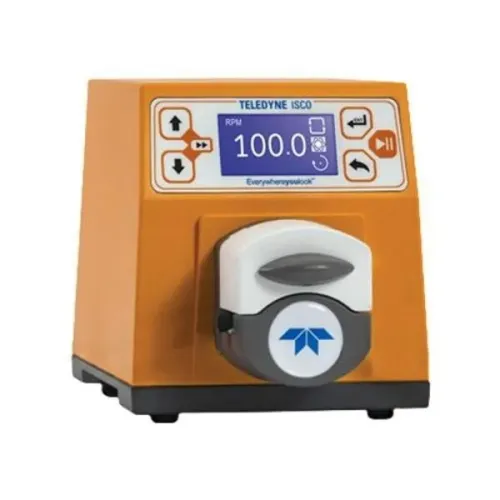
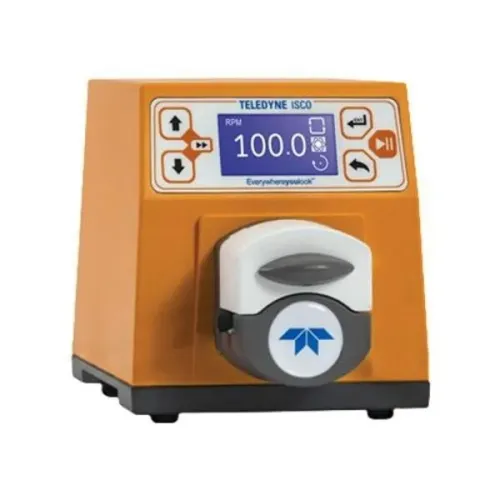
 | Chromatography PrePHPLC The ACCQPrep HP150 is a user-friendly preparative HPLC system designed to simplify purification workflows by eliminating unnecessary and complex... |
Frequently asked questions
When does an ACCQPrep system fit an oil testing laboratory?
It fits when you need to separate, collect, or purify compounds from an oil sample rather than produce only a routine specification result.
What should you specify for an ACCQPrep oil-separation method?
Specify sample mass and viscosity, column chemistry and dimensions, solvent composition and flow range, injection method, detector type, and fraction-collection requirements.
When is preparative HPLC better than another oil-separation method?
Preparative HPLC is a strong choice when you need controlled fraction collection, high-resolution separation, or a purified target fraction. Compare it with flash chromatography, solid-phase extraction, distillation, and analytical HPLC for simpler or different objectives.
How can you verify ACCQPrep availability and request a Mumbai quotation?
Ask an ACCQPrep system supplier in Mumbai to confirm the exact configuration, stock or lead time, installation scope, warranty, service coverage, compatible columns and solvents, and the quotation's tax and delivery terms.