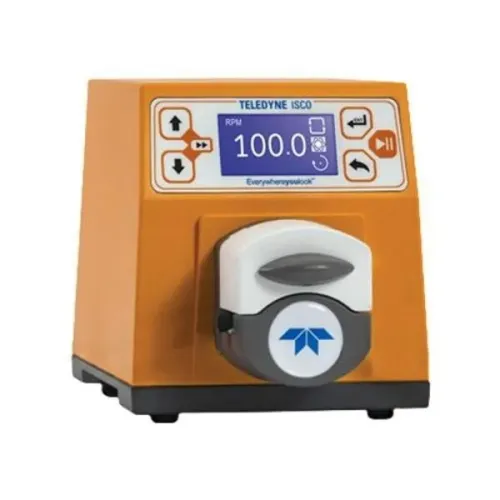

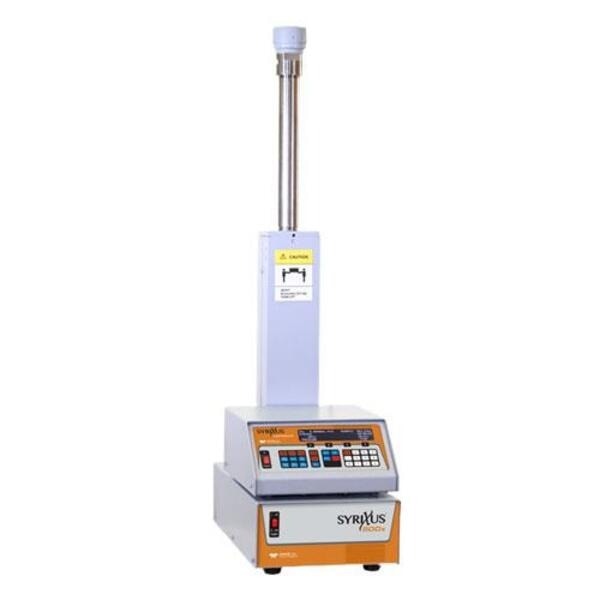
A SyriXus syringe pump controls the volume and timing of samples, reagents, standards, and rinse solutions; it does not measure water quality by itself. By the end, you will be able to match syringe delivery with a testing method, choose the main fluid-path components, and judge accuracy, carryover risk, maintenance, and throughput before adopting one.
Key takeaways
- A SyriXus pump doses liquids; it does not measure water quality.
- Use syringe dosing for repeatable reagent addition and small-volume sample handling.
- Match syringe material, valve design, tubing, and programme to the fluid.
- Verify dosing by mass, volume checks, blanks, and repeatability tests.
How a SyriXus pump fits into a water-analysis workflow
A SyriXus pump meters defined liquid volumes; it does not measure water quality by itself. In syringe pump water quality testing, the workflow starts with representative sampling, correct preservation, holding-time control, and the decision to measure dissolved or total analyte.
- Filter the sample when the method requires dissolved analyte, and remove bubbles before syringe loading.
- Aspirate the sample, acid, base, buffer, standard, oxidant, reductant, or rinse solution into a compatible syringe and fluid path.
- Dispense programmed volumes at defined intervals into a mixing coil, reaction chamber, flow cell, or sample-introduction line.
- Allow the specified reaction time before the detector reads the result.
- Use a separate photometer, ion-selective electrode, ICP-MS, ICP-OES, or chromatograph for concentration or endpoint measurement.
SyriXus syringe pumps for water testing support these formats:
| Method | Pump’s role | Measurement |
|---|---|---|
| Flow-injection analysis | Injects sample and reagent plugs through a mixing coil | Photometer, electrode, or chromatograph |
| Sequential-injection analysis | Aspirates and propels programmed volumes in sequence | Detector reads the reacted zone |
| Automated colorimetry | Adds reagent and controls reaction timing | Photometer measures colour |
| Inline pretreatment | Pushes samples through filters, cartridges, membranes, or cleanup columns | Downstream instrument measures analyte |
Precise dosing cannot correct poor sampling, expired holding time, sediment settling, or analyte adsorption to tubing. Check those controls before treating pump repeatability as result accuracy.
What water tests use syringe dosing
Alkalinity, acidity, hardness, and other endpoint titrations are practical syrixus pump laboratory applications. The pump adds acid, base, buffer, or titrant at a controlled rate while an electrode or optical detector identifies the endpoint. The pump meters liquid; it does not measure concentration itself.
- Nutrient tests use programmed reagent additions for colorimetric reactions, with a photometer measuring the developed colour after the required reaction time.
- Chlorine and other oxidant tests use oxidants, reductants, buffers, or colour reagents for disinfectant measurement; the detector then determines the endpoint or signal intensity.
- Serial dilution, calibration-curve preparation, standard addition, internal-standard delivery, and matrix spikes use repeatable aliquots of standards, filtered samples, or reagents.
- ICP-MS and ICP-OES workflows can use low-flow sample introduction, internal-standard delivery, or discrete additions. The instrument’s nebulizer and method set the acceptable flow and pressure, so a syringe pump is not automatically a replacement for the normal sample-introduction system.
- Sample conditioning can drive water through filters, solid-phase-extraction cartridges, membrane devices, or small cleanup columns before measurement. Validate back-pressure, particulate loading, channeling, sorbent chemistry, and breakthrough; the pump prevents none of these failures.
Suitable fluids include acids, bases, buffers, standards, oxidants, reductants, rinse solutions, and filtered samples. Raw particulate, oily, saline, or biologically active water needs different preparation, such as filtration, dilution, digestion, or a compatible disposable flow path, before syringe dosing.
How to choose the syringe, fluid path, and dosing programme
Choose the syringe by the smallest aliquot in your precision dosing water analysis, then check total batch volume and acceptable refill frequency. A smaller barrel improves displacement per step but increases refills; a larger barrel reduces interruptions but can make a tiny aliquot a short, error-prone plunger movement.
Judge syringe diameter, usable plunger travel, syringe geometry, and nominal positional resolution together: pump steps describe motion, not delivered volume until the syringe is installed.
- Match the syringe barrel, plunger seal, valve, tubing, and fittings to acids, bases, oxidants, solvents, salts, preservatives, standards, and samples. PTFE, PEEK, glass, and stainless steel suit different chemistries; confirm each wetted part rather than choosing by tubing alone.
- Keep dead volume low for serial dilution, standard addition, and alternating reagents. Choose channel count and valve arrangement from the number of fluids, rinse paths, and carryover checks.
- Specify pressure capacity for membrane filters and solid-phase-extraction cartridges. Confirm the detector’s allowable flow rate, pulse tolerance, and maximum volume.
| Dosing programme | Best configuration | Main limitation |
|---|---|---|
| Intermittent dosing | One syringe with timed pauses | Refill interrupts the sequence |
| Repeated aliquots | One syringe and repeatable valve positions | Refill frequency grows with batch size |
| Serial dilution or reagent sequence | Multiple channels, low-dead-volume valves | Cross-contamination needs rinsing and blanks |
| Continuous sample-plus-reagent stream | Dual syringes or a continuous-flow pump | More hardware and synchronisation |
A single pump suits discrete additions; dual pumps maintain one reagent stream while the other refills or alternate reagents without a long pause. Use programmed timing for reaction delays, not simply maximum speed.
When a syringe pump improves water testing—and when it does not
Syringe delivery wins when the method needs a defined microlitre-to-millilitre volume, low pulsation, and a timed addition rather than a continuous bulk flow.
| Option | Strength | Trade-off |
|---|---|---|
| Syringe | Accurate discrete dosing, low pulsation, low dead volume, high pressure capability | Finite reservoir; refill interrupts flow; limited throughput |
| Peristaltic | Continuous flow, simple disposable tubing, good for larger volumes | Pulsation, tubing wear, higher dead volume, lower pressure |
| Diaphragm | Strong pressure handling and chemical isolation | Pulsation, valve wear, more residual volume |
| Piston | Continuous high-pressure delivery and higher flow | Seal wear, contamination risk, more complex maintenance |
| Gravity-fed | Simple, quiet, and inexpensive | Flow changes with head height; poor timing and pressure control |
A syringe pump suits flow-injection analysis, sequential injection, discrete colorimetry, standard addition, serial dilution, and controlled reaction timing. It is a poor choice for high-throughput bulk dosing, very high flow rates, highly particulate samples, or long unattended runs needing an uninterrupted large-volume reservoir.
Use filtered laboratory standards, buffers, acids, bases, oxidants, and reductants with a compatible syringe, valve, seal, and tubing. Turbid or sediment-bearing water needs filtration or a disposable flow path; oily water needs stronger, solvent-compatible materials; saline water demands corrosion-resistant wetted parts. Biologically active water needs preservation, decontamination, and frequent replacement of wetted components.
Choose another pump when solids clog the path, biofilm grows during long runs, or continuous reservoir delivery matters more than discrete precision.
How to verify results, prevent failures, and specify a system
Accept a SyriXus setup only after testing delivered volume with the actual syringe, liquid, speed, valve, tubing, temperature, and direction. Weigh dispensed liquid gravimetrically, or collect it in a calibrated graduated vessel; add a timed-volume test to expose flow interruption.
- Rinse between samples and reagents, run a blank, and check early, middle, and late sequence positions for carryover.
- Use disposable syringes or replace tubing when contamination, adsorption, wear, or crystallisation threatens results.
- Confirm syringe barrel, seal, valve, fittings, and tubing compatibility with acids, bases, oxidants, solvents, salts, preservatives, and samples.
- Verify syringe loading, dimensions, priming, valve position, programmed volumes, pressure limits, and detector timing.
- Record cleaning, decontamination, operator training, programming time, syringe replacement, and preventive maintenance.
| Symptom | Check first | Corrective action |
|---|---|---|
| Bubbles or unstable detector signal | Degassing, vertical priming, loose fittings | Remove air and remake connections |
| Leaks or piston-step loss | Seal wear, pressure, backlash | Replace seal or syringe; reduce restriction |
| Incomplete prime or clogging | Valve path, filter, particles, crystals | Flush, filter, dissolve deposits, replace tubing |
| Evaporation or crystallisation | Open reservoir, temperature, concentrated reagent | Cap containers and control temperature |
Separate volumetric accuracy from repeatability and nominal resolution: small programmed steps do not overcome compliance, friction, leaks, viscosity, or air. Map required flow, pressure, volume, and carryover to Standard Methods for the Examination of Water and Wastewater and the named ASTM, EPA, or ISO method.
Test the interface with the autosampler, spectrophotometer, flow cell, fraction collector, PLC, or laboratory automation system. Septech Marketing LLP can compare a SyriXus configuration with that method, interface, cleaning regime, and maintenance burden rather than treating the pump as a standalone analyzer.
Related products
 | Pumps Teledyne ISCO SyriXus® single-pump systems combine a precision pump module with a versatile controller to deliver reliable, high-performance fluid... View product → |
 | Pumps Syringe Pump Options and Accessories A wide range of options and accessories is available for SyriXus and D-Series syringe pumps, allowing you to tailor each system to the specific... View product → |
Frequently asked questions
How does a SyriXus pump fit into a water-analysis workflow?
It meters a defined liquid volume after representative sampling, preservation, holding-time control, and the dissolved-versus-total analyte decision.
What water tests use syringe dosing?
Syringe dosing suits reagent addition, standards, internal standards, dilution, titration steps, and small-volume sample preparation when repeatable volumes matter.
How do you choose the syringe, fluid path, and dosing programme?
Specify syringe volume and material, valve and tubing compatibility, dead volume, flow rate, dispense volume, rinse steps, and the required repeatability.
When does a syringe pump improve water testing, and when does it not?
It improves controlled, repeatable liquid delivery; it does not replace representative sampling, analyte measurement, preservation, or methods that need continuous flow.
How do you verify results and prevent syringe-pump failures?
Check delivered mass or volume, run blanks and replicates, inspect leaks and bubbles, validate rinse cycles, and document the complete dosing programme.
Related product
 | Pumps Dual-Pump Continuous Flow Systems Teledyne ISCO SyriXus dual-pump continuous-flow systems are designed to deliver a smooth, uninterrupted flow of fluid for demanding laboratory and... View product → |