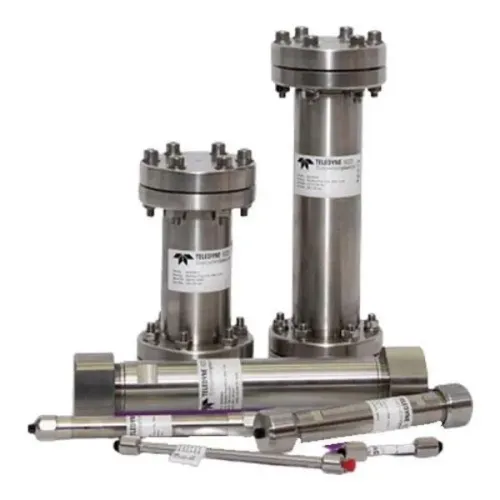

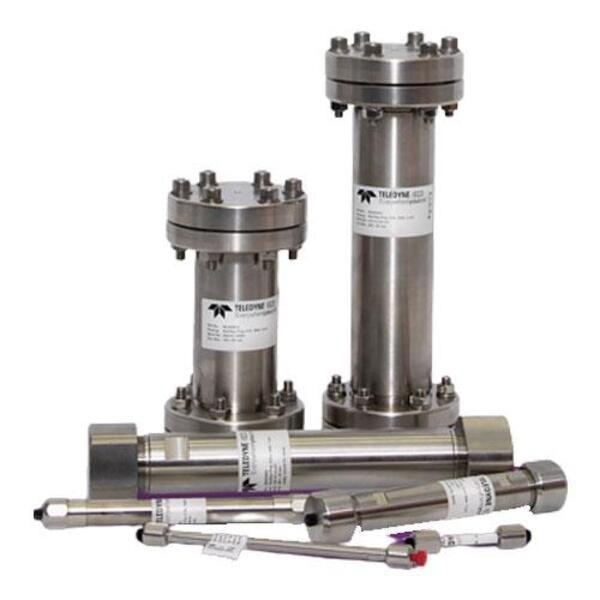
A RediSep shipment normally contains a prepacked cartridge, not a complete purification setup. By checking the package contents, technical specifications, system connections, and post-use requirements, you can order the correct column and avoid discovering that essential fittings or loading accessories are missing after delivery.
Key takeaways
- Confirm the shipment includes a prepacked column, not an empty cartridge.
- Record chemistry, dimensions, particle size, and connector details on the purchase order.
- Match column format and sample load to your purification system and method.
- Choose disposable, reusable, or replacement options based on post-run handling.
What arrives in a RediSep column shipment?
“RediSep prep columns for included” means the shipment contains the prepacked column, not an empty body for laboratory packing and not a complete purification system.
The normal contents are the packed column body or cartridge, inlet and outlet connections, short tubing where specified, end plugs where supplied, an identification label, and product documentation such as a certificate, packing record, or operating information.
The gram rating identifies the nominal mass of packed stationary phase, not safe sample capacity. A 4 g, 12 g, or 40 g label does not mean you can load that mass of compound. Pack quantity is SKU-specific: the quotation must state whether the price covers one cartridge, a multipack, or a case.
Do not assume these items are included unless the quotation names them:
- Solvent, fraction tubes, racks, or a fraction collector
- Sample loops or other injection hardware
- Solid-load cartridges or dry-load vessels
- Guard cartridges or precolumns
- Tubing for a nonmatching instrument
- Adapters for another pump, holder, or connection format
The phrase “kit,” “bundle,” or “column package” is not a contents list. Request a line-by-line packing list showing the redisep column package contents, quantities, supplied connections, and separate accessories. Check that your laboratory already has compatible solvent lines, collection hardware, and any required adapter before placing the order.
Which RediSep column details belong on the purchase order?
Name the exact phase, nominal media mass, particle specification, and cartridge dimensions; “RediSep column” is incomplete. For academic chromatography columns, also record bed volume, maximum pressure, recommended flow range, solvent compatibility, and practical sample-loading capacity.
| Specification | Record on purchase order | Why it matters |
|---|---|---|
| Stationary phase | Standard silica, high-performance silica, C18, amine, alumina, diol, cyano, or ion-exchange | Determines separation chemistry and solvent system |
| Particle size | Nominal range, such as approximately 20–40 µm | Finer silica can improve resolution but raises backpressure |
| Size | Nominal media mass, length, diameter, and bed volume | Separates cartridge capacity from physical fit |
| Operating limits | Maximum pressure and recommended flow range | Prevents leaks, channeling, or pump overload |
| Loading | Practical sample mass for your crude and method | The gram rating is packed-media mass, not a safe sample limit |
| Solvents | Compatible solvent list and equilibration requirements | Prevents swelling, drying, precipitation, or phase damage |
RediSep Rf Gold identifies a higher-performance product line, not elemental gold. Its finer silica should not be treated as equivalent to standard silica. A nominal 40 g cartridge does not guarantee a 40 g sample load; difficult mixtures, poor solubility, and high-purity targets demand less.
State whether the quoted values are nominal specifications or validated operating limits.
Add the instrument model, connection format, and pack quantity. Record lot or batch information when method continuity matters, because changing phase or packing lot can alter retention and pressure. Include whether loading will be liquid or dry; dry loading can reduce solvent mismatch but still broadens a band when the sample is poorly prepared.
Will the cartridge connect to your purification system?
A matching gram size does not prove that a RediSep cartridge fits your purification system. Mechanical dimensions, pressure limits, fittings, flow direction, and the holder must match.
| System | Compatible RediSep format | Connector or holder requirement | Plumbing check |
|---|---|---|---|
| ACCQPrep | Format specified for the ACCQPrep model | Manufacturer-specified cartridge holder | Confirm inlet/outlet orientation, tubing inner diameter, fittings, dead volume, and pressure rating |
| CombiFlash EZ Prep | Format specified for the EZ Prep model | EZ Prep cartridge holder or approved adapter | Confirm flow direction, fittings, pressure limit, and detector connection |
| Other purification systems | RediSep format approved for that system | Manufacturer-specified holder or adapter | Verify pump pressure, tubing ID, fittings, dead volume, and leak-free connection |
Use the manufacturer’s cartridge holder or adapter for another system. Do not force a fitting or assume that a third-party pump and column holder share the same pressure rating.
- Remove shipping plugs and connect the marked inlet to the solvent path.
- Flush with a compatible solvent at a low initial flow.
- Inspect every joint for leaks and verify the marked flow direction.
- Increase flow within the specified range while monitoring pressure.
- Configure the detector and fraction collector before injecting the sample.
- Run a blank or solvent test if the system has been idle or newly plumbed.
Record these checks when comparing redisep column purchase options. A correct connection still requires solvent compatibility, suitable tubing inner diameter, and enough low-volume plumbing to avoid excessive dead volume.
How do sample and method determine the column format?
Start with crude mass, mixture complexity, solubility, target polarity, solvent system, and required purity—not the cartridge label alone. Choose dimensions and stationary-phase mass to keep the sample below practical loading capacity; difficult mixtures needing high purity require more capacity or resolution than a clean, soluble crude.
A 4 g, 12 g, 24 g, 40 g, 80 g, 120 g, 220 g, or 330 g label refers mainly to stationary-phase mass, not permitted sample mass.
A larger cartridge is not automatically better. Overloading produces fronting, broad bands, and merged fractions, while an oversized bed wastes solvent and time. The same rule applies when comparing academic chromatography columns: match bed volume and phase to the separation, not simply to crude weight.
Phase choice changes the solvent plan and the failure mode.
| Phase | Best fit | Wrong choice or caution |
|---|---|---|
| Normal-phase silica | Nonpolar-to-moderately polar compounds in hexane, heptane, ethyl acetate, or dichloromethane systems | Unsuitable for an aqueous reversed-phase method |
| Reversed-phase C18 | Polar compounds using compatible aqueous-organic solvents | Requires equilibration; do not treat it as interchangeable with silica |
| Specialty phases | Amine, alumina, diol, cyano, or ion-exchange separations | Choose only when the compound’s interaction requires that chemistry |
Use liquid loading when the crude dissolves in a solvent no stronger than the starting mobile phase; a strong loading solvent broadens bands. Dry loading reduces solvent mismatch but adds handling and can still broaden the band if poorly packed. TLC solvent behaviour is a starting point, not a guaranteed loading method.
An analytical HPLC retention method cannot transfer directly to flash conditions because bed volume, particles, pressure, and resolution differ.
What happens after the run, and which purchase option fits the lab?
RediSep prep columns are prepacked, disposable flash cartridges, not empty bodies for laboratory packing. They have no universal reuse count; treat each cartridge as single-use unless the specific phase instructions and manufacturer documentation explicitly permit another number of runs.
After the run, flush residual sample and strongly retained compounds. Store the cartridge in the permitted solvent with both ends capped, then equilibrate it with the method solvent before the next run. Retire it when backpressure rises, channeling appears, contamination persists, a frit is damaged, or separation deteriorates.
Dispose of solvent and spent media through your laboratory’s chemical-waste procedure.
The RediSep column package contents and order unit vary by SKU:
| Option | Fits best | Confirm before ordering |
|---|---|---|
| Single cartridge | Method development or occasional work | Price per cartridge |
| Multipack | Repeated teaching or research runs | Number of cartridges per carton |
| Case quantity | High-throughput laboratories | Case count and storage requirements |
When comparing RediSep column purchase options, Septech Marketing LLP can help match the cartridge specification and system connection, but your laboratory must confirm the written quotation and package contents before ordering.
Use this purchase checklist:
- Phase and media mass
- Dimensions and bed volume
- Pressure and flow limits
- Solvent compatibility
- Liquid- or dry-loading approach
- Connector and instrument model
- Pack quantity: cartridge, multipack, or case
- Lot or batch information when method continuity matters
Related product
 | Chromatography Maximize Your Preparative HPLC Performance When the highest purity compound is required, Teledyne ISCO’s ACCQPrep or CombiFlash® EZ Prep systems... View product → |
Frequently asked questions
What arrives in a RediSep column shipment?
A RediSep prep column shipment contains the prepacked chromatography column. It is not an empty column body for laboratory packing and does not include a complete purification system.
Which RediSep column details belong on the purchase order?
List the column chemistry, dimensions, particle size, format, connector configuration, and required quantity so the supplier can identify the intended column precisely.
Will the cartridge connect to your purification system?
Check the column’s inlet and outlet connectors, operating pressure limits, dimensions, and system-specific adapter requirements against your purification instrument before ordering.
How do sample and method determine the column format?
Choose the format by considering sample mass or volume, solvent system, target separation, flow rate, pressure limit, and the available space and connections on your system.
What happens after the run, and which purchase option fits the lab?
Select a replacement or additional column option according to whether your method treats the column as single-use, permits reuse, or requires a fresh column for each purification.