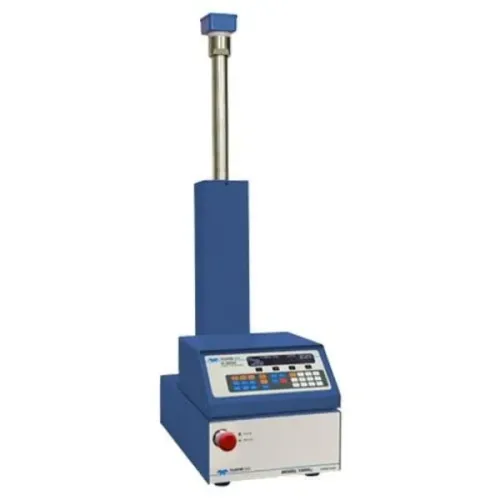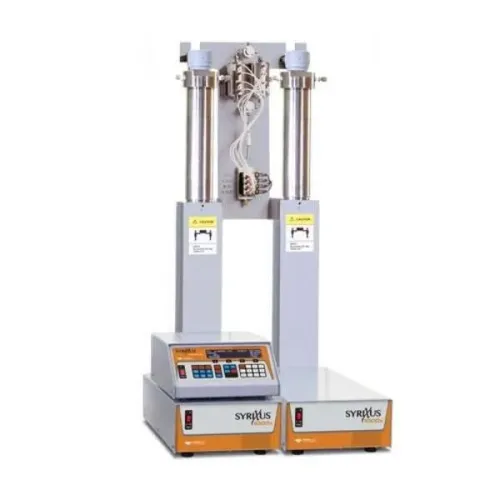

A designation such as 1000HLF does not tell you the pump’s flow range, pressure limit, syringe size, wetted materials, or approval for a classified area. By the end, you will have a specification for comparing quotations, checking monsoon readiness, and deciding whether the pump belongs inside or outside the hazardous vapour zone.
Key takeaways
- Request the current datasheet and exact 1000HLF model suffix.
- Match wetted materials, seals, fittings and duty cycle to your solvent.
- Do not treat monsoon protection as hazardous-area approval.
- Record commissioning checks, enclosure condition and service contacts locally.
What the 1000HLF designation does—and does not—tell you
“1000HLF” is a designation, not a performance guarantee. It does not establish syringe capacity, usable solvent volume, flow range or stability, maximum pressure, wetted materials, fittings, or hazardous-area approval. Treat a quoted 1000HLF syringe pump in Pune as unidentified until the supplier provides the current manufacturer datasheet and exact model suffix or variant.
Verify the quotation against your duty:
- State the volume per batch, dose, stroke, refill interval, and maximum solvent consumption; confirm the syringe capacity and dead volume.
- Request flow-accuracy, repeatability, and pulsation data at your required rate, solvent viscosity, temperature, and downstream pressure.
- Compare the rated discharge pressure with normal and blocked-line pressure; ask whether the drive limits force, detects occlusion, and survives a stalled syringe.
- Identify whether the duty is intermittent dispensing or uninterrupted delivery. A standard syringe pump needs coordinated refill or changeover for continuous supply.
- Require the syringe, seals, valves, tubing, and fittings to be named by material and checked against each solvent, including swelling and crystallisation risk.
- Confirm sealed reservoirs, upstream degassing, bubble detection, and the priming procedure. Degassing prevents outgassing; it does not make an inaccurate pump accurate.
For a 1000HLF syringe pump for monsoon solvent handling, test the complete assembly rather than relying on the nameplate. Humidity and temperature shifts can release bubbles, while a closed downstream valve can turn a high-force drive into a dangerous pressure source. Ask for a witnessed test using your solvent and operating pattern.
Match the pump configuration to the solvent and duty cycle
Match every wetted part to the solvent, not just the pump body. A solvent handling pump in Pune needs a compatibility statement for the syringe barrel, plunger seal, valve, tubing, fittings and check valve; one incompatible seal can swell, leak or shed particles.
| Choice | Select for | Failure to prevent |
|---|---|---|
| Syringe | Glass, PTFE-lined or solvent-rated polymer matched to corrosiveness and pressure | Swelling, cracking or extractables |
| Plunger seal | PTFE, FEP or another documented material for the solvent and temperature | Leakage, friction and lost volume |
| Valve and check valve | Wetted materials rated for vapour pressure, viscosity and crystallising residues | Backflow, sticking or blocked seats |
| Tubing and fittings | Tubing with compatible liner; fittings sized for pressure and solvent vapour | Permeation, softening and joint leaks |
| Operating mode | Intermittent dispensing with refill time, or coordinated dual-syringe changeover for uninterrupted flow | Flow interruption or overpressure |
For a 1000HLF syringe pump for monsoon solvent handling, specify a sealed reservoir, upstream degassing and bubble detection when volatile solvent outgasses after pressure or temperature falls. Prime slowly, confirm bubble-free tubing and record the usable syringe volume.
- Ask whether the drive limits pressure and alarms on occlusion when a valve closes or a line crystallises.
- Set a flush procedure for solvents that crystallise on drying; do not leave residue in the valve overnight.
- Choose continuous service only with verified refill or changeover hardware; a single syringe remains a finite-volume dispenser.
- Confirm spare syringe and seal materials before approving the configuration.
Separate hazardous-area approval from monsoon weather protection
Classify the installation before choosing the pump. A search phrase such as “hazardous location pump monsoon” combines two separate decisions: ignition protection for flammable vapour and resistance to Pune’s rain, humidity, condensation, and corrosion.
IEC 60079-10-1 classification identifies Zone 0, Zone 1, or Zone 2; obtain the site drawing or written assessment rather than guessing from distance to a solvent vessel.
Check these items with the site engineer and supplier:
- Identify the solvent’s vapour hazard, gas group, temperature class, and the classified boundary around the process, store, vents, and transfer points.
- Require certification for the complete electrical assembly—pump, motor or actuator, controller, power supply, cable glands, and connectors—not only an intrinsically safe barrier or certified motor.
- Keep a standard laboratory pump, controller, and power supply outside the classified vapour zone unless the supplier documents the required approval for that exact variant.
- Specify sealed reservoirs, degassing or bubble detection, and a priming procedure separately; vapour bubbles can disrupt delivery even when the installation is electrically safe.
| Option | What it means | When it applies |
|---|---|---|
| Certified hazardous-location pump | The complete assembly has documented protection for the specified zone, gas group, and temperature class | The equipment must operate inside the classified boundary |
| Standard pump outside the zone | The pump remains in an unclassified location, with solvent lines routed into the process under an approved layout | The risk assessment permits remote placement |
An IP rating only describes tested protection from solids and water under IEC 60529. It does not certify Zone 0, Zone 1, Zone 2, Class I, Division 1, or Division 2 use, nor prove resistance to solvent vapour.
Record the boundary, cable route, earthing method, enclosure rating, and monsoon controls in the specification for any solvent handling pump in pune.
Commission and operate the pump through Pune’s humid season
Commission it only after the pump has reached room temperature. Moving a cold unit from air conditioning into Pune’s humid monsoon air can condense water on electronics and connectors; allow warm-up, inspect for droplets, keep enclosure ventilation and drain paths clear, and store spare syringes and tubing sealed and dry.
- Keep the controller, power supply, and ordinary connectors outside any classified vapour zone unless certification identifies the gas group, temperature class, and installation limits. “Hazardous location pump monsoon” is not a certification category, and an IP rating does not prove ignition protection.
- Use cable glands rated for the cable diameter, tighten them without crushing the sheath, and inspect seals after each maintenance opening. Connect protective earth to the specified terminal; do not rely on a painted frame or a pipe.
- Prime through the approved solvent path at low speed until the outlet is bubble-free. Use sealed reservoirs, upstream degassing, and bubble detection where volatile solvent outgassing could interrupt delivery.
- Wipe every fitting after priming, then watch joints during a pressure hold. A wet fitting, falling reservoir level, or unexpected flow change stops the run.
- For solvent changeover, flush with a compatible intermediate solvent, collect waste, and confirm the new solvent will not precipitate residue or attack seals.
- If flow stops, stop the drive and isolate pressure before checking for a closed valve, crystallised solvent, kinked tubing, or blocked filter. Never clear a blockage by raising pressure blindly.
- At shutdown, stop delivery, depressurise, flush or drain according to the solvent procedure, cap exposed ports, and record the final condition.
These controls belong in the operating record for a 1000hlf syringe pump for monsoon solvent handling.
Build a quotation and service specification you can verify locally
For a 1000hlf syringe pump in pune, make the quotation auditable rather than accepting a model name as proof of suitability. Ask Septech Marketing LLP to identify the exact manufacturer suffix and match every claim to a document or acceptance test.
1. Request the current datasheet, nameplate photograph, flow table for each installed syringe size, maximum pressure, wetted materials, fittings, mains-voltage requirement, and operating-duty limits. If the pump enters a classified area, demand the certificate for the complete electrical assembly, with the site’s IEC 60079-10-1 Zone, gas group, and temperature class recorded.
2. Specify site services: delivery, positioning, cable-gland sealing, earthing, reservoir and tubing connections, priming, degassing, leak testing, and a monsoon inspection for condensation or water ingress. Require a written solvent-flushing and changeover procedure.
3. Price a commissioning spares kit containing spare syringes, seals, valves, tubing, fittings, and any occlusion or bubble-detection parts. State Pune stock status, lead time, storage conditions, and substitute-part approval.
4. Require operator and maintenance training covering solvent flushing, stalled-syringe recovery, blocked-line isolation, shutdown, and spill response. Include attendance records.
5. Define calibration using named solvents, syringe size, flow points, pressure, temperature, balance or reference instrument, acceptance limits, and certificate traceability. Put corrective-action terms in the quote.
6. For the solvent handling pump in pune, set response times for telephone support, on-site attendance, escalation, loan equipment, and emergency spares. Include warranty exclusions in writing.
Related product
Related product
Frequently asked questions
What does the 1000HLF designation confirm?
It does not confirm syringe capacity, usable solvent volume, flow range, pressure, wetted materials, fittings or hazardous-area approval. Request the current manufacturer datasheet and exact model suffix.
How should you match a 1000HLF pump to solvent duty?
Compare the solvent with the pump’s wetted materials, seals, tubing and fittings, then confirm the required flow, pressure, stroke volume and duty cycle. Specify compatibility for the actual solvent mixture and temperature.
Does monsoon weather protection provide hazardous-area approval?
No. Humidity and rain protection address environmental exposure, while hazardous-area approval identifies equipment assessed for a named classified location and protection method. Request the applicable certificate and marking.
What should you check when commissioning the pump in Pune’s humid season?
Inspect packaging, enclosure, cable entries, tubing, fittings and grounding; run a controlled leak and flow test with the intended solvent; and record pressure, flow, alarms and environmental conditions.
What belongs in a local quotation and service specification?
Include the exact model suffix, syringe and flow specifications, pressure rating, wetted materials, seals, fittings, electrical supply, enclosure rating, hazardous-area documents, installation scope, spares, warranty and local service response.
Related product
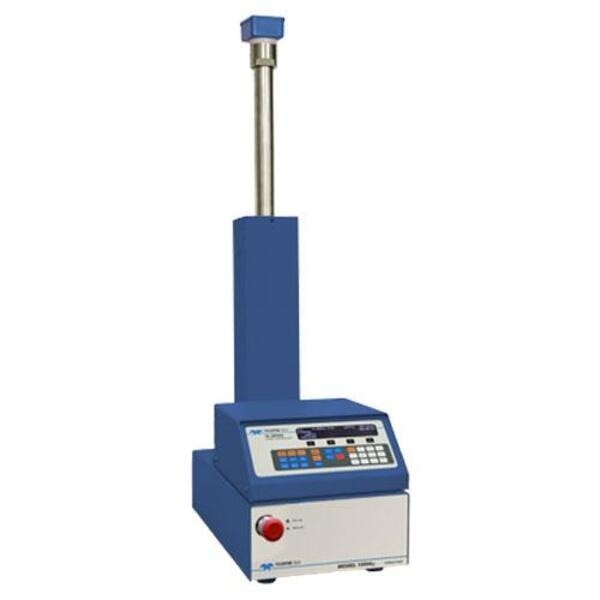
 | Pumps HLF-Series Hazardous Location Pumps Teledyne ISCO HLF-Series precision syringe pumps are engineered to deliver accurate, predictable flow and pressure control across an exceptionally... View product → |