
A failed dual-pump system does not automatically need replacement. By separating fluid-path wear from drive, control, and compatibility failures, you can compare recovery and replacement using downtime, testing, parts availability, and validated performance rather than a single repair quote.
Key takeaways
- Isolate each pump module before choosing recovery or replacement.
- Compare downtime, spares, labour, compatibility, and failure risk—not purchase price alone.
- Replace one module only after confirming the remaining pump’s condition and compatibility.
- Release the system after matched flow, pressure, priming, and synchronization tests.
Diagnose the fault before choosing recovery or replacement
Unstable flow does not automatically justify replacement. For dual pump continuous flow systems recovery compared with replacement in Pune, begin by isolating each module and recording flow, pressure, priming time, alarms, motor noise, temperature rise, and synchronization under load.
| Finding | Recoverable fault | Replacement signal |
|---|---|---|
| Flow or pressure | Worn piston seals, inlet filters, check valves, tubing, or fittings | Persistent instability after fluid-path service |
| Priming | Air leak, blocked filter, poor valve seating, or contaminated fluid path | Damaged pump head or repeated loss of prime after rebuilding |
| Noise or heat | Misalignment, bearing wear, obstruction, or incorrect lubrication | Excessive backlash, seized drive, or motor and controller damage |
| Alarms | Sensor fault, loose connection, or calibration drift | Obsolete controller, unavailable firmware, or recurring unexplained alarms |
| Synchronization | Unequal restriction, calibration error, or control setting | Failed encoder, incompatible drive, or irreparable control electronics |
Recovery fits when the pump head, drive, encoder, and controller remain serviceable. Inspect and clean the fluid path, replace worn seals and plungers, check valve seating, flush both channels, recalibrate, and verify each pump separately before testing the pair.
Replacement becomes stronger when the head is scored, the drive has excessive backlash, spare parts or firmware are unavailable, or one module cannot match the other’s displacement, pressure capability, control loop, or stroke frequency.
Dual pump continuous flow systems are not automatically redundant: substituting one mismatched module can alter flow ratio, gradient composition, and pulsation despite a correct displayed flow rate.
Compare the real cost, lead time, and risk of both options
Compare the two options on delivered, validated operating time—not the invoice alone. Continuous flow system recovery is financially stronger when the fault is confined to seals, check valves, contamination, or calibration and parts remain available; replacement wins when downtime, obsolete controls, repeated failures, or unavailable spares dominate.
Option | Real cost | Lead time | Main risk Recovery | Inspection, labour, seals, check valves, cleaning, recalibration, freight, commissioning, and validation | Site diagnosis plus parts availability | A hidden fault survives a partial repair and causes another shutdown Full replacement | Pump modules, controller or interface changes, installation, freight, commissioning, and validation | Procurement and installation schedule | New modules do not match displacement, control response, pressure, or pulsation For continuous flow pump replacement in Pune, specify the fluid, viscosity, temperature, flow and pressure ranges, wetted materials, electrical supply, communication protocol, and controller-retention requirement.
“Same flow and pressure” does not prove equivalent metering.
For recovery, require separate testing of each pump and the combined system. Verify delivered flow by a documented calibrated gravimetric method at representative flow rates, recording solvent, temperature, collection time, balance identification, and acceptance limits. Check flow ratio, pressure stability, start-up recovery, and gradient or ramp response.
Include Pune site power quality, earthing, temperature, humidity, dust, flushing-water quality, warranty coverage, and post-service response time in either quotation. Choose the lower-risk option only after adding validation and the cost of another failure.
Prepare the system and supplier for a useful assessment
Before authorising work, give the supplier enough operating evidence to separate a recoverable fault from a mismatched replacement. State the model and serial number, pump-head configuration, controller or firmware version, fluid composition, solvent additives, flow-rate range, operating pressure, tubing and seal materials, alarm history, and recent maintenance.
- Send the original pressure and flow trend, including pressure ripple, start-up behaviour, flow-ratio accuracy, and the point at which instability appears.
- Describe site conditions in Pune: supply voltage and power interruptions, earthing, ambient temperature and humidity, dust exposure, and the water quality used for flushing.
- Require the work order to name the inspection scope: separate testing of each pump, inlet and outlet check-valves, seals, tubing, inlet filtration, priming, degassing, controller faults, and pump synchronisation.
- Specify that continuous flow system recovery includes fluid-path flushing, replacement of contaminated or worn seals, independent priming, and verification of individual and combined operation. A seal change alone is not an adequate repair if check-valve seating remains unchecked.
- Agree the commercial terms before dispatch: diagnostic and travel charges, parts approval limits, expected turnaround, freight responsibility, commissioning procedure, written service report, warranty period, and post-service response time.
For dual pump maintenance in Pune, set inspection triggers by operating hours, solvent severity, pressure history, and flow stability rather than by calendar date alone.
Ask Septech Marketing LLP to record both channels at representative operating points and define the acceptance limits before work begins; otherwise “repaired” can mean only that the display shows the requested flow.
Related products
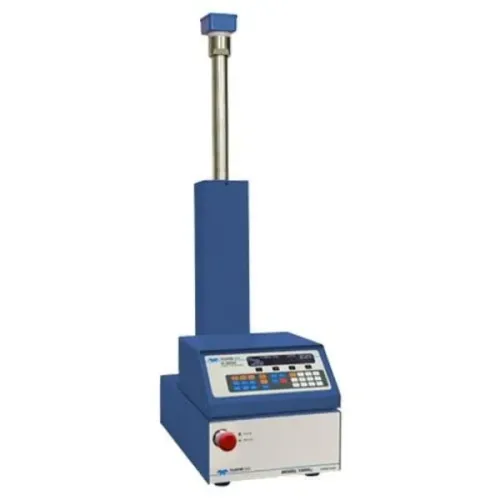
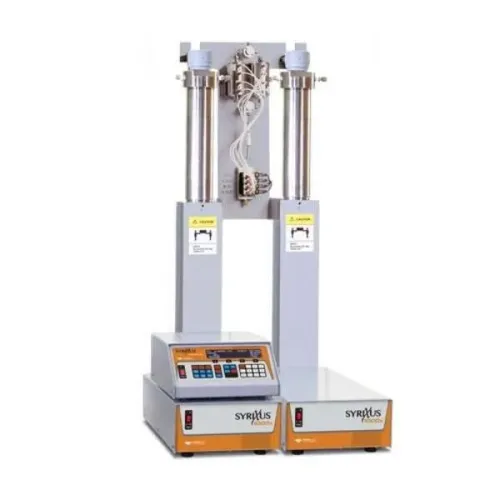
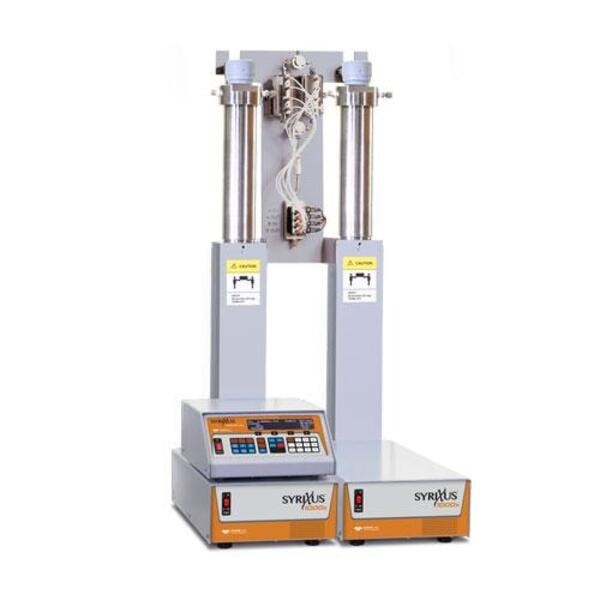
 | Pumps Dual-Pump Continuous Flow Systems Teledyne ISCO SyriXus dual-pump continuous-flow systems are designed to deliver a smooth, uninterrupted flow of fluid for demanding laboratory and... View product → |
 | New Era Advanced pumping systems are designed to deliver smooth, continuous, and highly reliable fluid transfer by eliminating the flow rate pauses and... View product → |
Decide whether to recover both pump modules or replace one
A single-module repair or replacement is safe only when the fault is isolated, the second pump passes an independent wet-performance check, and the replacement matches the original displacement, maximum pressure, control loop, stroke frequency, wetted materials, and controller interface. “Same flow and pressure” is not enough; different metering behaviour can alter pulsation or solvent composition.
Approve one-module work only when all of these conditions are recorded:
- The unaffected module holds its flow and pressure across the intended operating range.
- The controller shows no synchronization, communication, or drive fault.
- The pump pair does not require a fixed flow ratio, shared gradient, or coordinated stroke timing that the replacement could disturb.
- The replacement is compatible with the fluid, viscosity and temperature range, electrical supply, tubing, seals, and retained control system.
- The repaired channel passes individual and combined testing after priming and flushing.
Assess both modules together when they share a controller, operate as a ratio-controlled pair, or show pressure pulsation, unstable flow, loss of synchronization, or repeated check-valve or seal failures. Inspect inlet and outlet check valves, seals, pump heads, tubing, and drive feedback on both channels; changing one seal will not cure poor valve seating.
For continuous flow pump replacement in Pune, specify site power, earthing, dust, humidity, and flushing-water conditions because recurrence risk belongs in the warranty scope. Dual pump continuous flow systems return to service only after matched testing of each channel and the combined system during starts, ramps, and representative pressure changes.
Release the system only after matched wet-performance testing
Do not release the equipment because both pump displays show the target rate. For dual pump continuous flow systems recovery compared with replacement in Pune, approval requires matched wet-performance testing with the actual solvent, tubing, operating pressure, and control configuration. Test each pump alone, then test both together at representative production or analytical conditions.
- Verify delivered flow gravimetrically, or with a documented calibrated flow meter, at low, nominal, and maximum planned rates. Record solvent, temperature, collection time, instrument identification, and the laboratory’s acceptance limit.
- Measure pressure stability and pulsation during steady operation. A new seal will not correct poor check-valve seating, trapped air, or unstable inlet supply.
- Check priming and start-up recovery after an overnight stop, solvent change, and controlled restart. Record the time to reach stable flow and pressure.
- Confirm the flow ratio, total flow, and composition during ramping and gradient changes. Test the combined system, not only the pump displays.
- Repeat the test after sustained operation at the intended pressure. Inspect leaks, tubing, fittings, and temperature rise before approval.
| Test | Recovered equipment | Replacement equipment |
|---|---|---|
| Independent flow | Meets limits for each pump after flushing, service, and calibration | Matches the existing pump across the tested range |
| Combined operation | Stable ratio, pressure, and synchronization | Matches both channels without altered pulsation or gradient composition |
| Records for release | Fault, parts, serial numbers, calibration, and pressure results | Serial numbers, configuration, firmware, calibration, and commissioning results |
Document the final approval under the laboratory quality system. For regulated work, records supporting technically valid results align with ISO/IEC 17025 expectations. A defined dual pump maintenance in Pune plan should then use operating hours, solvent severity, pressure history, and flow stability—not a calendar alone.
Frequently asked questions
How do you diagnose a dual pump continuous flow system fault?
Isolate each pump module and record flow, pressure, priming time, alarms, motor noise, temperature rise, and synchronization under load.
How should you compare recovery with pump replacement?
Compare the full cost of labour, parts, testing, downtime, lead time, compatibility, and the risk of a repeat failure.
What information should you prepare for a supplier assessment?
Provide the system model, pump details, fault history, alarm records, operating conditions, maintenance records, and measured performance data.
When should you recover both pump modules or replace one?
Recover both when the modules remain mechanically and electrically sound; replace one only after testing the other and confirming matched compatibility.
What testing is required before releasing the system?
Confirm matched flow, pressure, priming time, temperature rise, alarm response, and synchronization under the intended operating load.