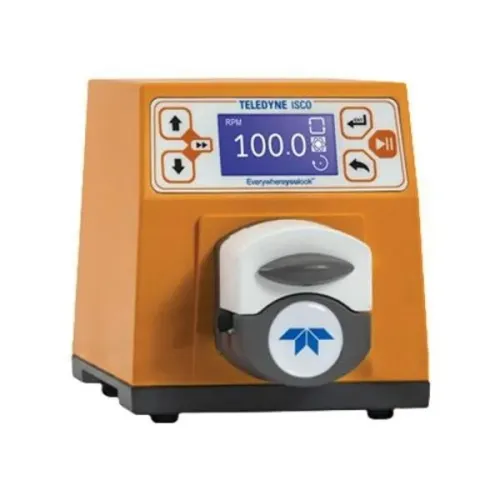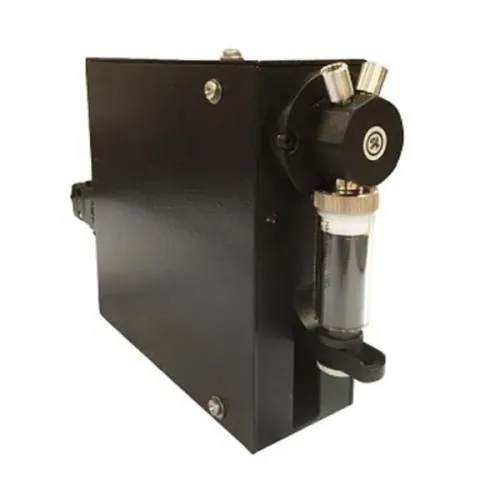

An injection-volume figure does not tell you whether an autoinjector will handle your solvents, pressure, sample containers, or chromatography software. Before requesting a quotation, you need a specification checklist, an itemised accessories list, a sample-volume calculation, and an acceptance test that matches your laboratory’s actual method.
Key takeaways
- Request syringe, loop, needle, pressure-limit and cycle-time specifications.
- List included parts separately from optional accessories and replacement consumables.
- Calculate total sample demand across every planned purification run.
- Define installation, system-fit and injection-accuracy checks before acceptance.
Request the complete specification, not only the injection-volume range
Do not compare quotations until each supplier states the complete autoinjector module details. Injection volume alone can hide an unsuitable syringe, loop, needle, or pressure limit. Use this checklist in your chromatography autoinjector module purchase guide:
- Sample-vial or reservoir format, needle and seat design, syringe capacity, sample-loop volume, minimum and maximum injection volume
- Metering accuracy, repeatability, and carryover measured at your actual low and high injection volumes
- Injection-cycle time, including aspiration, vial wash, injection, post-injection wash, and valve reset
- Maximum pressure for the complete flow path, including the needle, valve, loop, capillaries, and fittings
- Wetted materials, solvent compatibility, dead volume, seal type, and replacement interval
- Controlled temperature range, sample-path coverage, equilibration time, monitoring, condensation control, and operating ambient range
- Electrical supply, communications interface, control signals, software driver, and preparative HPLC integration requirements
Separate advertised capability from usable capability before accepting a number. A broad nominal range is not proof of accurate delivery with your selected syringe or loop.
| Specification | Request from supplier | Why it affects comparison |
|---|---|---|
| Pressure | Rated limit for every wetted component | A conventional-HPLC module can fail in a UHPLC path |
| Cycle time | Complete sequence for your wash method | Short chromatographic runs can still lose throughput |
| Temperature | Tray, needle, syringe, and loop coverage | Cooling the tray alone may not protect unstable samples |
Put leak rate, precision, carryover, vial-position accuracy, communication, and recovery after needle or syringe replacement into the acceptance criteria.
Separate included parts from optional accessories and consumables
Treat every part that touches the sample as a separately priced item, not as an assumed part of the module. Ask the quotation to mark each item included, optional, or excluded, and state whether the module supplies one syringe or multiple syringes.
- Syringe: capacity, plunger material, termination type, and compatibility with the drive and valve
- Needle: gauge, length, material, and needle-seat design
- Sample loop and injection valve, including loop volume and pressure rating
- Connecting capillaries, fittings, ferrules, and waste tubing
- Vial tray, plate carrier, sample vial or reservoir, and vial inserts
- Mounting hardware, power supply, and communication cable
- Software, driver, licence, and installation media
- Spare seals, needle seat, and other service parts
Do not treat a syringe as a reusable generic accessory. Extra syringes, needles, loops, vial inserts, trays, reservoirs, seals, and tubing are consumables or replacement parts unless the supplier names them in the included-parts schedule.
Temperature control also needs a separate line: confirm whether cooling covers only the sample tray or the needle, syringe, loop, and complete sample path. Request the controlled range, equilibration time, temperature monitoring, condensation control, and whether the cooling module is included.
A supplier listing only “temperature-controlled tray” has not specified temperature control for the injection path.
Calculate sample demand across repeated purification runs
Total sample demand is the volume consumed by every injection, sample-contact wash, priming operation, and repeated run—not merely the programmed injection volume.
Use this calculation:
- Vtotal = R × [N × (Vinj + Voverhead) + Vprime + Vflush] + Vreserve
- R is the number of repeated runs.
- N is the number of injections per run.
- Vinj is the programmed injection volume.
- Voverhead covers needle, loop, tubing, syringe, and vial dead volume for each injection.
- Vprime and Vflush are sample volumes used per run. Exclude wash solvent that never contains sample.
- Vreserve is the sample left in the vial or insert because the needle cannot reach or safely withdraw it.
For example, three runs with eight 250 µL injections, 40 µL overhead per injection, 1,500 µL for priming and sample-line flushing per run, and 500 µL residual sample require 11,960 µL, or 11.96 mL:
3 × [(8 × (250 + 40)) + 1,500] + 500 = 11,960 µL
Record the autoinjector module details that determine overhead: syringe capacity, loop volume, wash path, vial format, and manufacturer’s minimum sample volume. Add a practical reserve for failed injections or an extra purification run; otherwise a nominally sufficient vial can run dry before the final injection.
Match the module to your preparative HPLC system and purchasing brief
A module that fits the bench can still fail at the protocol level. Before approving autoinjector module specifications and included parts before ordering in Pune, obtain the host HPLC model, pump and detector families, fitting standard, tubing internal diameter, and available mounting clearance.
1. Match the fluid path. Check sample-vial format, needle internal diameter, seat design, sample-loop volume, syringe capacity, injection range, wetted materials, solvent compatibility, dead volume, and carryover controls. Compare the pressure rating of the needle, valve, loop, capillaries, and fittings with the complete preparative flow path; the lowest-rated component controls the limit.
2. Match the controls. Confirm the communication interface, firmware and software versions, remote commands, trigger and start/stop signals, injection-status output, and whether an interface box or separate controller is required. Request a written compatibility statement for your pump, detector, and control software.
3. Match the site and brief. State bench or rack dimensions, clearances, ambient temperature and humidity, electrical supply, plug, installation scope, qualification tests, delivery lead time, local service response, spare-parts availability, warranty exclusions, and whether freight, import charges, taxes, and commissioning are included.
4. Match the workflow. Specify repeated-run sequencing, wash cycles, sample temperature requirements, and acceptance tests for leak rate, injection repeatability, communication, and pressure stability. Septech Marketing LLP can use this checklist to distinguish a complete quotation from a component-only price. A chromatography autoinjector module purchase guide is useful only when it records these system-specific checks.
Related product
 | Chromatography Automation Modules Chromatography AutoInjector Module:Ideal for Multiple Purification Runs of the Same Sample The AutoInjector Module is designed for laboratories that need to perform... View product → |
Compare injection methods, then define installation and acceptance checks
Choose an autoinjector when repeated injections must be consistent, unattended, and protected from operator timing or syringe technique. Manual injection suits occasional runs and simple systems; it becomes a poor choice when sample is limited or injections must repeat overnight.
| Method | Strength | Choose it when |
|---|---|---|
| Manual injection | Lowest hardware complexity | You run occasional samples and accept operator-dependent timing |
| Fixed-loop injector | Defined volume and robust high-pressure operation | You need simple, repeatable injections at one loop volume |
| Autoinjector | Programmable vial handling, injection timing, washing, and repeatability | You run many samples, limited sample, or unattended preparative sequences |
| Autosampler | Broad vial or plate capacity and automated sequence handling | Sample throughput matters more than the shortest injection cycle |
| Syringe-pump delivery | Continuous, metered flow | The process requires controlled feed rather than discrete chromatographic injections |
Use a chromatography autoinjector module purchase guide to convert the comparison into a site acceptance test. Confirm that the autoinjector module included accessories match the installed flow path, rather than assuming the quotation contains every connection.
- Run the buyer’s actual vial type, solvent, injection volume, target pressure, and a carryover-sensitive compound.
- Check leak-free operation across the complete flow path, including needle, seat, valve, loop, capillaries, and fittings; the lowest-rated part sets the limit.
- Measure injection precision, carryover, cycle time, vial-position accuracy, communications, and recovery after needle or syringe replacement.
- Record failed injections, wash performance, pressure stability, and sample recovery against written acceptance limits.
Do not accept a broad nominal volume range as proof of low-volume accuracy. Test the syringe and loop at the volumes your purification method actually uses.
Frequently asked questions
What autoinjector module details should you request before ordering?
Request the injection-volume range, syringe size and type, sample-loop volume, needle dimensions, vial compatibility, pressure limit, injection cycle time, wash sequence, carryover data, communication interface and preparative HPLC compatibility.
Which autoinjector module parts are usually included, optional or consumable?
Ask suppliers to list the base module, syringe, sample loop, needle, vial tray, tubing, fittings, cables and software separately. Confirm whether spare syringes, alternate loops, wash solvents, septa, filters and replacement seals cost extra.
How do you calculate sample demand for repeated purification runs?
Multiply the sample volume per injection by the number of injections, then add priming, wash, dead-volume and repeat-run allowances. Check that the syringe and vial capacity support the full sequence without refill interruptions.
How should you compare injection methods and accept the installed module?
Compare manual, valve-loop and syringe-based injection for precision, throughput, sample loss and carryover. During acceptance, verify communication, leak-free connections, injection volume, pressure behaviour, wash performance and successful operation with your preparative HPLC method.