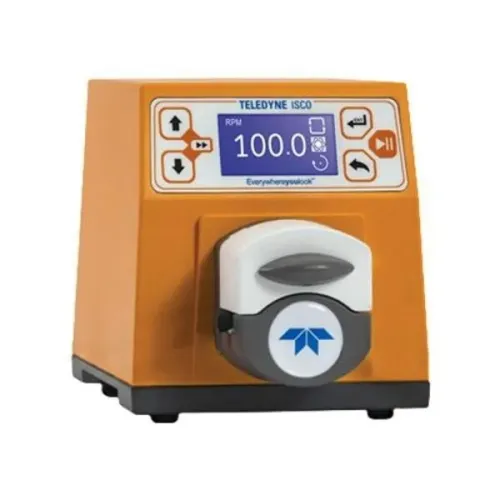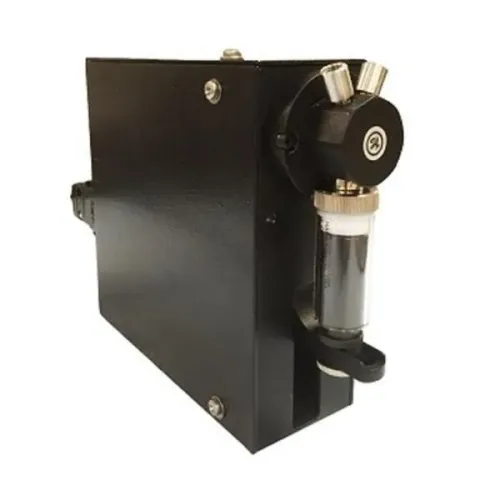

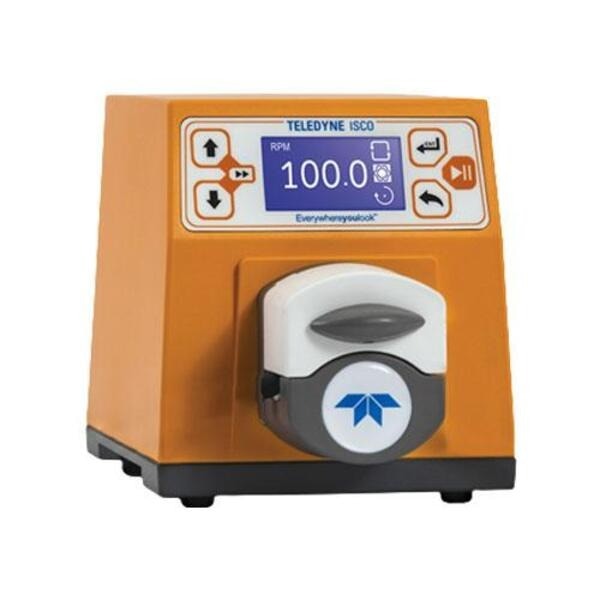
A pump’s maximum flow rate does not tell you how it will perform at your tubing size, discharge pressure, fluid viscosity, or required duty cycle. By comparing the PeriXus with specific laboratory models and alternative pump technologies, you can identify a suitable operating point, expose hidden consumable and maintenance costs, and request a meaningful local quotation.
Key takeaways
- Compare pumps at your actual flow, pressure, temperature, and fluid conditions.
- Choose PeriXus when tubing isolation and gentle, contamination-controlled transfer matter.
- Choose piston or syringe pumps for higher metering accuracy and pressure.
- Verify tubing life, pulsation, calibration records, and installed operating performance.
Start with the operating point, not the pump’s maximum flow
Obtain the operating point before comparing a perixus peristaltic pump with any laboratory pump. Record the actual fluid, viscosity, temperature, solids or cells, flow range, discharge pressure, suction lift, duty cycle, cleaning method, allowable pulsation, and required accuracy. Maximum flow at zero back-pressure proves little.
For a perixus peristaltic pump for comparison in pune, request the exact model number and current datasheet, then ask for:
- Pump-head type, roller count, compatible tubing IDs and materials, wetted materials, and chemical-resistance limits
- Open-loop or feedback-controlled speed, displayed setpoint or measured flow, and the calibration procedure
- Rated continuous pressure, speed range, replacement-tube availability, replacement-head availability, and local service support
- Flow repeatability after a defined operating period, not only a new-tube result
| Specification | PeriXus record | Other pump record |
|---|---|---|
| Flow test | Same tubing ID, speed, fluid, temperature, and pressure | Same conditions |
| Pressure | Continuous operating rating at the target flow | Continuous rating at that flow |
| Control | Open-loop or feedback; setpoint or measured flow | Same details |
| Tubing | Material, wall thickness, ID, temperature limit, expected life | Same details |
| Verification | Gravimetric or volumetric calibration method and repeatability | Same method |
Tubing life depends on speed, pressure, temperature, chemical exposure, occlusion, and compression cycles. A fair comparison therefore reports delivered flow after defined runtime; otherwise different tubing sizes or zero back-pressure conditions create a false equivalence.
How PeriXus compares with the listed peristaltic pump models
A meaningful peristaltic pump comparison starts by treating each model as a separate pump, not as a representative of its brand. For a perixus peristaltic pump for comparison in pune, obtain the exact PeriXus model, pump head, tubing specification, speed range, pressure rating, and calibration data before ranking it against these alternatives.
| Model | Compare directly | Decision point |
|---|---|---|
| PeriXus | Flow at the chosen tubing ID, speed, pressure, and fluid temperature | Reject any claim based only on maximum flow |
| BT100-3J | Same test conditions and speed-control method | Check whether the displayed value is a setpoint or measured flow |
| BQ50-1J | Tubing materials, head compatibility, and continuous-pressure rating | Match chemical resistance and duty cycle |
| GM100-2A | Delivered flow, repeatability, and replacement-tube availability | Prefer the model with verifiable local consumables |
| WX10 | Minimum stable flow, priming behaviour, and leak containment | Check performance at the actual operating point |
| GM200-1A | Back-pressure performance and tube-life evidence | A higher nominal range does not prove better feed control |
| GM400-1A | Motor duty, pressure limit, and serviceable head design | Compare sustained operation, not peak output |
| BT600-2J | Tubing size, roller or occlusion design, and heat generation | Confirm tube life under your pressure and speed |
| New Era 9000 Series | Feedback control, calibration method, and alarm functions | Separate automation features from measured accuracy |
Run gravimetric tests using identical tubing ID, fluid viscosity, temperature, back pressure, and duration. Record repeatability after continuous operation, then compare tube cost, rupture containment, spare-part lead time, and service response alongside purchase price. That is the peristaltic pump comparison that exposes real operating differences.
When piston, syringe, diaphragm, or gear pumps are the better choice
Choose a different technology when the operating point demands pressure, metering accuracy, lower pulsation, or duty beyond the selected PeriXus configuration. Compare at identical fluid, temperature, tubing or wetted materials, flow, pressure, and operating duration.
| Technology | Outperforms a PeriXus when | Trade-off to check |
|---|---|---|
| Reciprocating piston | You need sustained high pressure, tight flow accuracy, and low-pulsation solvent delivery for analytical or preparative HPLC. | Seals and valves contact the fluid, creating contamination and maintenance risks. |
| Syringe | You are dispensing small, repeatable volumes with near-zero pulsation, such as calibration standards or analytical dosing. | The finite barrel requires refilling, so uninterrupted transfer needs multiple syringes or a changeover system. |
| Diaphragm | The pump must self-prime, tolerate dry running, or move gas-liquid mixtures and chemically aggressive fluids. | Diaphragm movement and valves produce pulsation; dead volume and valve wear complicate cleaning and recovery. |
| Gear | You need continuous transfer of a viscous liquid at stable pressure and the fluid contains no abrasive particles. | Gears and seals sit in the wetted path, so leakage can contaminate the process and particles accelerate wear. |
For peristaltic pump alternatives in Pune, judge contamination by the failure consequence: a ruptured tube can expose the work area, while a piston or gear seal failure can contaminate the fluid. Ask for leak detection, containment, spare-part lead time, and a replacement procedure.
For laboratory fluid transfer pumps in Pune, specify duty cycle, allowable pulsation, suction lift, solids or cells, cleaning method, and pressure—not only maximum flow. A PeriXus remains sensible for isolated, low-pressure transfer when tubing containment outweighs high-pressure accuracy.
Tubing, pulsation, and calibration decide real-world performance
A pump set to 100 mL/min does not guarantee 100 mL/min at the outlet. Tubing inner diameter, wall thickness, elasticity, and material can change delivered flow substantially, even when the speed setting stays unchanged.
- Tubing selection: a larger bore raises capacity; a softer or thinner wall changes occlusion and slip. Confirm chemical compatibility, temperature limit, and compression rating.
- Roller count: fewer rollers create larger flow pulses; more rollers smooth delivery but increase compression cycles and can reduce tube life.
- Pump speed: higher speed increases nominal flow and pulsation while accelerating heat and fatigue. Do not compare maximum rates measured at different speeds.
- Back pressure: discharge restriction can reduce flow, increase tube deformation, and shorten tube life. Record pressure at the pump outlet, not just the downstream instrument rating.
- Viscosity: thicker fluids resist recovery of the tube and reduce actual flow as speed or pressure rises. Temperature changes viscosity, so record it.
- Tube fatigue: repeated occlusion permanently changes the tube’s bore and elasticity. Replace tubing on a defined cycle, then recalibrate.
A useful peristaltic pump comparison reports gravimetric flow using the same tubing size, speed, fluid, viscosity, temperature, back pressure, and run duration. For a PeriXus peristaltic pump, request that test at your operating point and ask whether speed control is open-loop or feedback-controlled. A displayed setpoint is not measured flow.
Compare repeatability before and after the planned operating period, not just the first reading.
Build a Pune buying specification that can be verified after installation
A supplier comparison is incomplete until the promised flow survives your site conditions. For laboratory fluid transfer pumps in Pune, record the actual fluid, viscosity, solids or cells, temperature, flow range, discharge pressure, suction lift, wetted materials, allowable pulsation, accuracy, duty cycle, and cleaning method.
1. Ask for a signed application sheet naming the exact model, pump head, tubing ID and material, roller count, speed range, rated continuous pressure, and chemical-compatibility limits.
2. Require a site-acceptance test at the same tubing ID, speed, pressure, fluid, and temperature used for comparison. Record measured flow, calibration method, pulsation, and repeatability after an agreed operating period; reject zero-pressure maximum-flow claims.
3. Confirm whether speed control is open-loop or feedback-controlled, whether the display shows a setpoint or measured flow, and how the system detects a tube rupture, leak, blocked discharge, or dry run.
4. Obtain a cleaning and replacement procedure covering tubing, pump head, seals or valves, containment, and disposal. Ask for spare-parts stock in Pune, replacement-tubing lead time, service response time, warranty exclusions, and technician training.
Use the same evidence for the perixus peristaltic pump for comparison in Pune and shortlisted peristaltic pump alternatives in Pune. Whether you contact Septech Marketing LLP or another supplier, require signed test records rather than a catalogue comparison; a diaphragm pump must also disclose dead volume, valve wear, dry-running limits, and pulsation.
Related products
 | Pumps The Teledyne ISCO PeriXus Peristaltic Pump is designed for both laboratory use and continuous processing applications. View product → |
 | Longer Peristaltic Pump BT100-3J Basic Peristaltic Pump The BT100-3J is a precise peristaltic pump designed for laboratory, pharmaceutical, and industrial applications requiring low-to-mid flow rates. View product → |
Frequently asked questions
What should you measure before comparing a PeriXus peristaltic pump?
Record the fluid, viscosity, temperature, solids or cells, flow range, discharge pressure, suction lift, duty cycle, cleaning method, allowable pulsation, and required accuracy. Compare pumps at this operating point rather than at maximum flow with zero back-pressure.
How does a PeriXus peristaltic pump compare with other listed peristaltic pumps?
Compare the models by verified flow at discharge pressure, compatible tubing materials and sizes, minimum controllable flow, pulsation, tubing replacement interval, calibration method, and service support in Pune. A maximum-flow figure alone does not establish equivalent performance.
When is a piston, syringe, diaphragm, or gear pump a better choice?
Use piston or syringe pumps when precise low-volume metering and pressure stability are the priority. Choose diaphragm pumps for chemically aggressive fluids or gas-handling duties, and gear pumps for steady transfer of clean, viscous liquids. Check contamination, shear, solids, pressure, and cleaning requirements before deciding.
How do tubing, pulsation, and calibration affect peristaltic pump performance?
Tubing bore, wall thickness, material, compression, temperature, and fatigue determine flow and service life. Measure pulsation at the outlet under operating back-pressure, then calibrate with the actual tubing and fluid at the required flow range.
What should a Pune buying specification verify after installation?
Specify the operating flow range, discharge pressure, tubing material and size, fluid temperature, allowable pulsation, accuracy, duty cycle, cleaning method, electrical supply, spares, and acceptance tests. Record measured flow, pressure, calibration results, and tubing condition during commissioning.
Related products
 | Longer Peristaltic Pump The BQ50-1J is a compact peristaltic pump designed for laboratory and equipment-mounted applications requiring precise low flow rates. View product → |
 | New Era Programmable Peristaltic Pumps 9000 Series The 9000 Series Programmable Peristaltic Pumps are designed for precision fluid handling, making them ideal for applications ranging from small-scale... View product → |
 | Longer Peristaltic Pump GM100-2A&WX10 Mini Peristaltic Pump The GM100-2A & WX10 is a compact mini peristaltic pump designed for laboratory and small-scale industrial applications requiring precise fluid... |
 | Longer Lab Syringe Pump The MP series piston pump is a precision dispensing pump developed by Longer Pump, designed to achieve constant and stable liquid transfer. View product → |